For years, Toyota told the world that hybrids were the smart bridge to electric cars. Tomorrow in Guangzhou, the world’s biggest carmaker shows a new kind of bridge: an electric SUV with a petrol engine that never drives the wheels. And Toyota reportedly wants to build 400,000 of them a year by 2028.
Your first stop for car news: the quick version here, plus a button on every story that takes you straight to the original report.
EV & Tech Day
Toyota finally plugs in, its own way
China · Range-extender EV
Toyota’s first range-extender EV debuts Nov. 27, and it looks like a Highlander
Toyota will reveal its first extended-range electric vehicle (EREV) at the Guangzhou Motor Show on November 27, Electrek reports. Its Chinese joint venture, GAC Toyota, has already posted a blurry teaser on Weibo.
Toyota hasn’t confirmed the name. But the silhouette looks a lot like the Highlander, the three-row family SUV, and Electrek expects that’s what it is.
Here’s how an EREV works. An electric motor always drives the wheels. A small petrol engine sits on board only as a generator, topping up the battery when it runs low. You drive it like an EV, but you refuel it like a normal car when you’re far from a charger.
Think of it as an EV that packs its own portable charger. Compared with a regular plug-in hybrid, EREVs are often quieter and cheaper. They’re less efficient than a pure EV, though, because burning petrol to make electricity wastes energy.
The numbers behind the plan are big. A Nikkei report in September said Toyota would start building its first EREV in China in spring 2027. Per Nikkei, Toyota aims for 200,000 EREVs in 2027 and about 400,000 in 2028.
Why now? Toyota is losing ground in China. It sold just over 1.05 million vehicles there in the first nine months of 2026, about 19% fewer than a year earlier. October sales fell nearly 20%, its eighth straight monthly drop. Chinese buyers have embraced range-extenders, and a Toyota executive has said the company wants to stay out of the brutal battery-EV price war.
Why it matters to you: if you’ve wanted an electric Toyota but worry about chargers, this is the format that could solve it. Pricing hasn’t been announced, so tomorrow’s reveal is the first real test.
Outside China: Electrek says the EREV probably won’t come to the US. American buyers get a fully electric three-row Highlander in early 2027, built in Kentucky, with 77 kWh or 95.8 kWh batteries and up to 287 or 320 miles of range. No other markets have been named for the EREV yet, so readers in Europe, Africa and Asia should watch tomorrow’s details closely.
What happens next: the full reveal lands at the Guangzhou Motor Show on Friday, November 27, with production due in spring 2027.
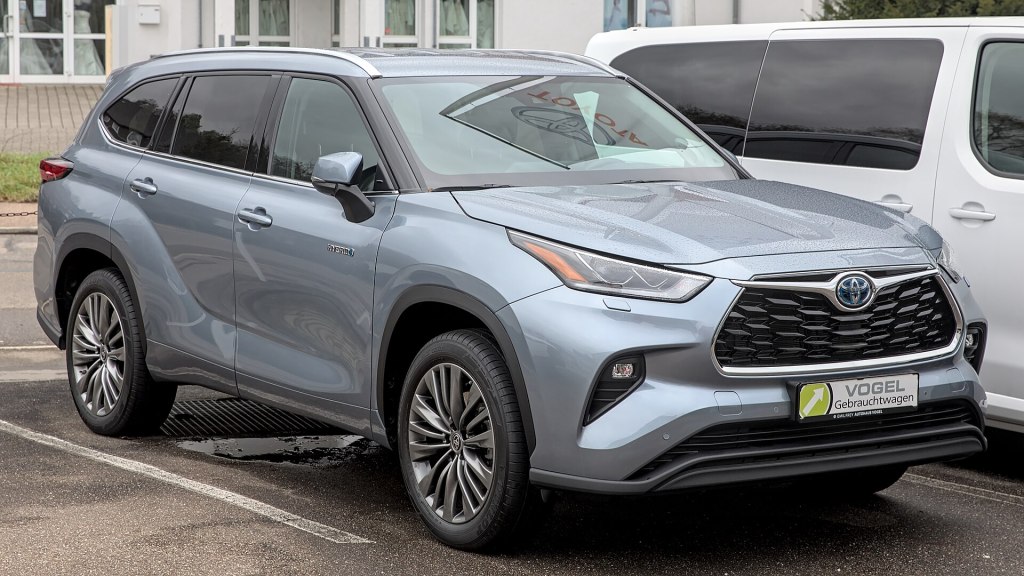
Quick take: (opinion) Toyota is late to pure EVs, but it may be right on time for range-extenders. A Highlander that runs on electricity all week and never strands you on a long trip is an easy sell. The risk is that Chinese brands have sold this formula for years, and they’re cheaper. Toyota’s brand trust has to be worth the difference.
Toyota’s EREV is revealed tomorrow in Guangzhou. Subscribe and get the specs in your inbox the morning after.
By the numbers
400,000
Toyota EREVs targeted for 2028, per Nikkei
1,526 hp
2027 Xiaomi SU7 Ultra’s combined output
4 min
Full-charge rate Rice’s new graphite handled in the lab
$15,000
Lucid’s Black Friday credit on the Gravity Touring
Quick hits
Faster sedans, faster charging, cheaper EVs
China · Performance EV
2027 Xiaomi SU7 Ultra gets fatter tyres and a longer body
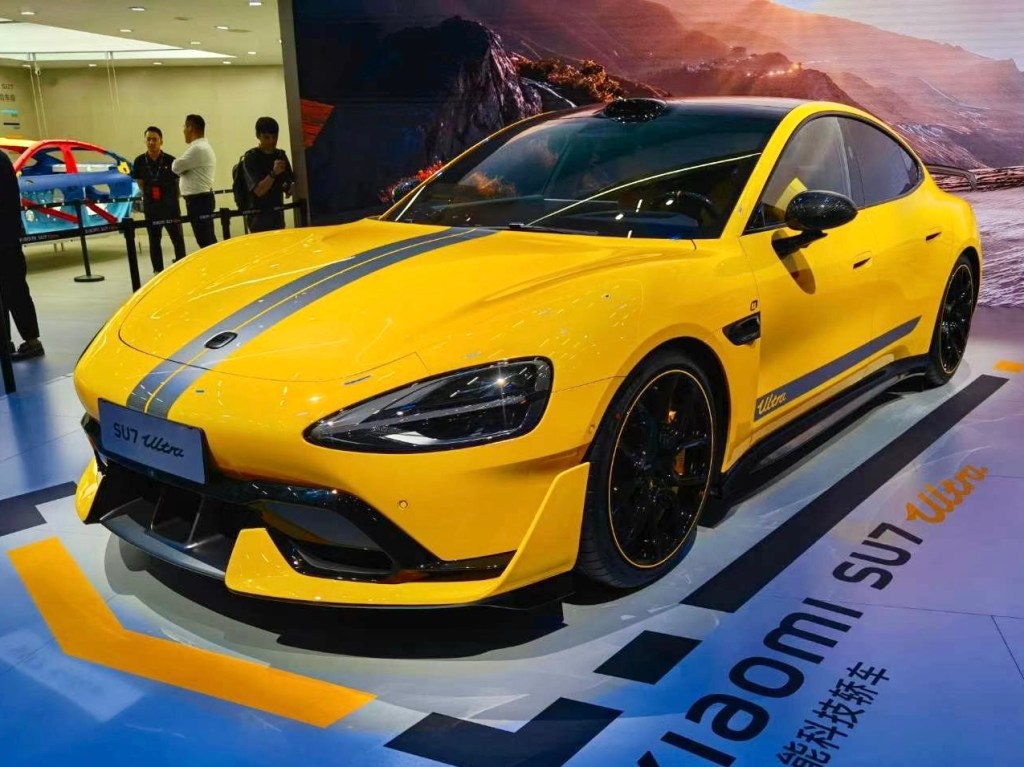
China’s industry ministry published filings for the updated Xiaomi SU7 Ultra on November 25. The three motors still make a combined 1,138 kW (1,526 hp), with a 318 km/h top speed. The big change is grip: front tyres grow from 265 mm to 295 mm on one setup, with 325 mm rears.
The filing lists three body lengths, up to 5,315 mm, plus a choice of two or five seats and an electric rear spoiler. It also got a little heavier, at up to 2,380 kg. The current car already lapped the Nürburgring in 7:04.957 in 2025. Outside China, it’s on preorder in the UAE at 375,900 AED, and German sales are planned for Q3 2027. No on-sale date has been given for the update.
USA · Battery tech
0.2 seconds
Rice University makes fast-charging battery graphite in a flash
Researchers at Rice University turned cheap petroleum coke into battery-grade graphite in 0.2 seconds, using an electrical pulse that briefly heats it to about 2,500°C. A pinch of nickel leaves wider gaps between the carbon layers, so lithium moves faster. In lab cells, the anode handled a rate equal to a full charge in four minutes and kept 80% of its capacity after 1,000 cycles. The team estimates more than 80% lower energy use and cost than normal graphite production. The catch: this is lab-cell performance, not a full car pack, and it still has to scale.
Japan / Europe · City EV
Suzuki’s tiny Ignis comes back as a 26 kWh EV
Suzuki unveiled the all-new Ignis EV on November 25: a four-seat hatchback just 3,570 mm long, shorter than a Swift. It uses a 26 kWh LFP battery and a 67 kW (about 90 hp) motor driving two wheels. Range, price and charging times haven’t been announced. Sales start in Europe and other selected markets from summer 2027. Small, simple EVs are exactly what many buyers in Asia and Africa have been waiting for, so watch for wider market news.
USA · Deals
Black Friday EV deals hit $10,000 to $15,000 off
US buyers are seeing the biggest EV discounts in months. Lucid is offering a $15,000 credit on the 2027 Gravity Touring and $10,000 on the Air Touring, both starting at $79,900, until November 30. Kia’s $10,000 cash drops the 2026 EV9 to as low as $44,900 and the Niro EV to $29,700, with deals running to January 4. Volkswagen has $10,000 off the outgoing 2026 ID.4 while stock lasts. Context: the average new EV sold for $56,221 in October, down 2.9% from a year earlier.
Australia · Vehicle-to-grid
Leapmotor B10 joins Australia’s biggest “car as a battery” trial
Leapmotor’s B10 Design LR is now eligible for Amber Electric’s vehicle-to-grid program, which lets an EV power a home or sell energy back to the grid. Leapmotor is the second carmaker in, after BYD, and both say taking part won’t by itself affect the warranty. The B10 costs A$40,888 and has a 67.1 kWh LFP battery. The program is rolling out to 1,000 homes with about A$16.8 million from ARENA, and Amber says some users earned over A$500 within hours during price spikes. Earnings aren’t guaranteed, and a bidirectional charger is required.
Keep reading on Gridside
- Ford’s $3B Battery Plant Fires Up With CATL Tech
- Europe EV Sales: Battery Cars Up 49%, Germany Tops 45%
- Chinese Car Ban Nears: Why Mercedes May Get a Pass
Your turn: would you buy a range-extender Toyota with a petrol generator on board, or is it a pure EV or nothing for you? Tell us in the comments.
Tomorrow on Gridside: it’s Money & Industry Friday. We follow the money behind the week’s biggest car deal and what it means for the price you pay.
Know someone who swears they’ll never buy an EV? Send them this and settle it.
Sources
- Electrek: Toyota is about to unveil its first extended-range EV
- CarNewsChina: 2027 Xiaomi SU7 Ultra revealed with wider tires
- Digital Trends: Charging your EV in under five minutes
- PakWheels: Suzuki unveils new Ignis EV
- Electrek: Kia, Lucid and VW slash EV prices for Black Friday
- Zecar: Leapmotor B10 joins Amber’s V2G program
Photo credits: Toyota Highlander Hybrid and Xiaomi SU7 Ultra file photos via Wikimedia Commons.


Leave a Reply