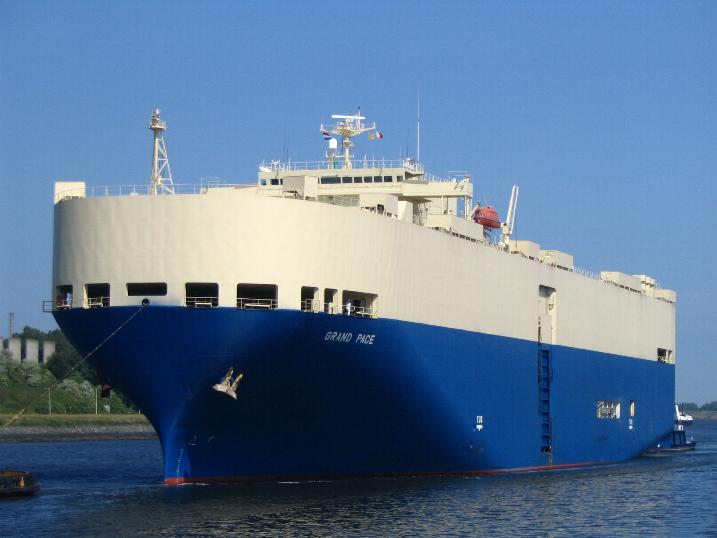
Fourteen economies. Tariffs of up to 40%. A list that runs from Beijing to Brussels to Bangladesh. And yet the imported car in your driveway is mostly not on Washington’s new hit list. Here’s the catch, and who still gets hurt.
Your first stop for car news: the quick version here, plus a button on every story that takes you straight to the original report.
Money & Industry
A tariff net with a car-shaped hole
Trade · Global
USTR proposes tariffs on 14 economies, and carves out most cars
On November 25, the US Trade Representative closed its Section 301 investigations into what it calls “structural excess capacity” in manufacturing. The probes began on March 11 and covered 16 economies. Fourteen got an affirmative finding. Mexico and Norway got no determination.
The proposed rates are steep. China faces up to 20% on many goods, up to 10% on another group, and exemptions for some products. If talks with Beijing are judged inadequate, the fallback is up to 40% on everything. Vietnam faces up to 35%. India faces up to 25%, or 17% if it signs a reciprocal trade deal. Singapore is at up to 20%. The EU, Japan, South Korea, Switzerland and Taiwan are at up to 15%. Indonesia, Malaysia, Thailand, Cambodia and Bangladesh are at up to 18%.
Now the twist. For 13 of the 14 economies, goods already covered by Section 232 tariffs are excluded, according to law firm Baker McKenzie’s reading of the notices. That list includes passenger cars, light trucks and their parts, medium and heavy trucks and their parts, plus steel, aluminium and copper. Those products already pay their own national-security tariffs, so this round skips them.
China is the exception. Its notice has no Section 232 carve-out and uses its own annex system instead. Autos, new-energy vehicles and batteries are among the sectors the US flagged. The timing is pointed: China exported 582,000 NEVs in October alone, up 77% from a year earlier, per China Passenger Car Association data cited by ChinaEVHome.
Why it matters to you: if you’re shopping for a Toyota, a BMW or a Hyundai, this round mostly isn’t about your car. It’s about everything around it. Business Standard reports that Indian motorcycles and off-highway tyres face fresh risk, because they sit outside the Section 232 auto list. The US bought about 26% (roughly $6.24 billion) of India’s $24 billion in auto-part exports in FY26, and the specified parts already under Section 232 keep paying 25%.
Think of it as a fishing net with a car-shaped hole cut in the middle. The big fish slip through. Smaller things built near them, like bikes, tyres and the parts that aren’t on the list, don’t.
Outside the US: the gaps between countries are what exporters will watch. India’s proposed 25% sits above the 18% proposed for Thailand, Indonesia and Malaysia, so Indian exporters of goods without an exemption could lose ground. Jefferies says a negotiated 17% rate could flip that into a 1 to 3 point edge.
What happens next: written comments are due January 5, 2027. The US–China truce expires January 10. Public hearings open January 25 at the US International Trade Commission in Washington. Nothing takes effect before final notices, which Baker McKenzie expects in early 2027.
Quick take: this is our opinion. Carving cars out is less a gift than a reminder that autos already have their own tariff wall. The real story is China: with no carve-out and a 40% fallback hanging over talks, the January 10 truce deadline now matters more to the car industry than any auto show this winter.
The tariff hearings open January 25. Subscribe and get the outcome in your inbox the day it lands, along with what it means for prices.
14
economies facing proposed US tariffs
40%
China’s worst-case rate if talks fail
582,000
Chinese NEV exports in October, up 77%
Jan 25
US public hearings begin
Also moving the money
Shutdowns, a Japanese pact and a 41-inch Le Mans bet
Europe · Industry
Stellantis adds more European factory shutdowns
Stellantis is lining up more factory pauses in Europe over the coming weeks, Just Auto reports, citing Bloomberg. Mulhouse in France, which builds the Peugeot 308, will stop for several days in December and again from December 23 to January 11. Rennes, home of the Citroën C5 Aircross, stops from December 18 until January 5, possibly longer.
At Sochaux, the union CGT says the night shift ends and roughly 500 temporary jobs go from January 2027, with output cut to 850 cars a day. Four more downtime days were added on November 26, for 14 in total. On the same day, Stellantis Europe chief Emanuele Cappellano blamed a “dramatic” jump in factory power bills, plus import competition. Chinese brands took 10.5% of Europe’s new-car market from January to September, autoevolution reports. This is the same week Stellantis killed the Peugeot 9X8 Le Mans programme.
Japan · Industry
14 Japanese carmakers agree to share steel, plastics and wiring
Toyota, Honda, Nissan, Mazda and 10 other Japanese vehicle makers will standardize parts and materials to cut costs and fight back against Chinese rivals, Sri Lanka’s Newswire reports. The plan comes from the Japan Automobile Manufacturers Association (JAMA) and the Japan Auto Parts Industries Association.
The first three targets are steel specs, quality standards for plastics (especially recycled plastic), and fewer variants of wiring harnesses so they’re easier to build by machine. JAMA chairman Koji Sato, who is also Toyota’s vice chairman, framed it as keeping cars a pillar of Japan’s economy. It isn’t a merger, and no timeline was given. Separately, CarBuzz says joint Honda–Nissan software work should reach showrooms around 2029.
Le Mans · USA
41 inches
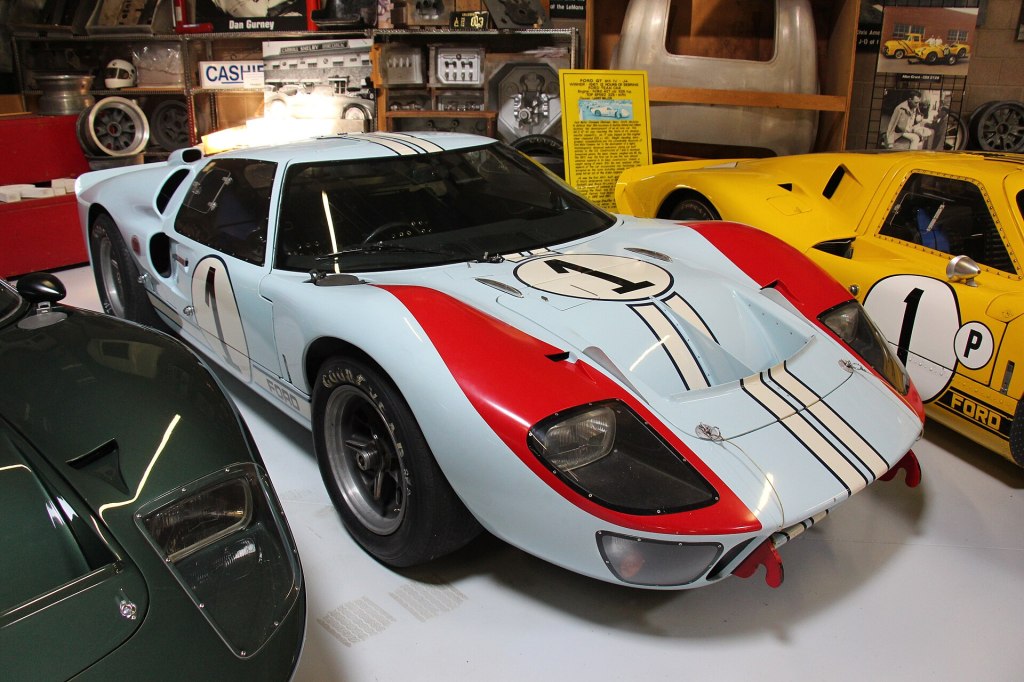
Ford reveals the GT41, its first Le Mans Hypercar
Ford pulled the cover off its 2027 Le Mans challenger at Ford Field in Detroit on Thanksgiving Day. The name is a nod to the GT40: that car stood 40 inches tall at the roof, and the GT41 measures 41 inches from the ground to its air intake. Under the ORECA-built LMDh chassis sits a naturally aspirated 5.4-litre V8 based on Ford’s Coyote engine, paired with a hybrid system.
Two cars will run all nine 2027 WEC rounds. Logan Sargeant, Tom Blomqvist, Matt Campbell, Sebastian Priaulx, Mike Rockenfeller and Nick Yelloly are confirmed. Ford has already done a 30-hour test at MotorLand Aragón in Spain. Next up are US tests in December and January, then the season opener in Qatar on March 27, 2027, and the 95th Le Mans on June 9–13. We asked what was under the drape last week. Now we know.
USA · Buyers
Black Friday’s biggest car deals end Monday
If you’re buying in the US, most Black Friday offers tracked by CarsDirect expire November 30. Among the biggest: a $15,000 credit on the 2027 Lucid Gravity Touring if it’s delivered by the 30th. The 2026 Jeep Wrangler combines employee pricing with a bonus on older stock for up to $7,546 off. The 3.0-litre diesel 2026 GMC Sierra 1500 is 14% off MSRP, which is worth up to $11,300 on the Denali Diesel.
On the budget end, the 2026 Honda Civic LX leases from $199 a month for 39 months with $4,299 due at signing, if you qualify for loyalty. Read the fine print: many offers are regional and can’t be combined with cheap financing.
F1 · Qatar
Qatar GP: titles gone, but second place is on the line
Kimi Antonelli and Mercedes have both championships wrapped up. The fight now is for second. Max Verstappen has 304 points, Lewis Hamilton 267, and George Russell and Lando Norris 264 each. Coffee Corner Motorsport reckons Hamilton must outscore Verstappen by at least 13 points on Sunday to keep it alive for Abu Dhabi. In the constructors’ race, Red Bull leads McLaren by only nine points, 440 to 431.
Pirelli caps each tyre set at 27 laps, so everyone has to stop at least twice. Sergio Pérez starts with a grid penalty, per Speedweek, and Ferrari arrives fresh from its Vegas feud.
Start times: first practice runs today at 5:30 AM PT, 1:30 PM UK and 4:30 PM East Africa. Qualifying is Saturday at 10 AM PT, 6 PM UK and 9 PM East Africa. The race is Sunday at 8 AM PT, 4 PM UK and 7 PM East Africa.
Keep reading on Gridside
- Chinese Car Ban Nears: Why Mercedes May Get a Pass
- Peugeot 9X8 Axed as Stellantis Quits Factory Racing
- Ford Le Mans Hypercar: What’s Under the Drape?
Your turn: should cars keep their own separate tariff lane, or should they face the same excess-capacity rules as everything else? Tell us in the comments.
Tomorrow is Car of the Week & Culture: one irresistible machine, the story behind it, and the weekend’s best car culture.
Know someone who’d argue that tariffs should cover cars too? Send them this and let the debate begin.
Sources
- Baker McKenzie: USTR proposes Section 301 tariffs on 14 economies
- KPMG: USTR findings and proposed Section 301 tariffs
- ChinaEVHome: U.S. weighs new tariffs on Chinese goods
- Business Standard: Fresh US tariff proposal and Indian auto exporters
- Just Auto: Stellantis plans further European factory halts
- autoevolution: Stellantis Sochaux cuts night shift
- Newswire: 14 Japanese auto giants join forces
- CarBuzz: Japan’s biggest automakers team up
- Motor Sport Magazine: Ford reveals GT41 Le Mans Hypercar
- 24 Hours of Le Mans: Ford Racing unveils the GT41
- CarsDirect: Best Black Friday car deals for 2026
- Formula 1: Qatar Grand Prix 2026 timetable
- Coffee Corner Motorsport: Qatar Grand Prix 2026 preview
- Speedweek: What’s still at stake in the final GPs
Photo credits: car carrier in Rotterdam and 1966 Ford GT40 Mk II, both file photos via Wikimedia Commons and Wikimedia Commons.


Leave a Reply