
The factories that build your pickup could soon be building flying weapons. The Pentagon wants “millions” of drones in the coming years, and it has gone knocking on the doors of General Motors and Ford to make them. Detroit has not said yes. Here is why that hesitation might be the smartest thing it does all year.
Your first stop for car news: the quick version here, plus a button on every story that takes you straight to the original report.
The Big Question
Should carmakers build the Pentagon’s drones?
Industry · USA
GM, Ford and Magna in early drone talks
What happened. The Pentagon is in preliminary talks with GM, Ford, the parts giant Magna and other manufacturers about mass-producing military drone parts, the Wall Street Journal reported on Tuesday. The shopping list includes motors, actuators, sensors and lidar. Nothing is signed.
GM is reportedly weighing whether to build drone motors. They would be closer in size to a riding lawn mower motor than a V8. Ford told Reuters its talks were about military vehicles and satellite work. A day earlier, it agreed to take a minority stake in Revolution Space. GM declined to comment and pointed to its GM Defense unit.
Why now. The scale is huge. The Pentagon’s Drone Dominance push calls for more than 200,000 aircraft by 2027, with 30,000 ordered in the first phase. Officials put the military drone market at $20 billion to $30 billion a year. Only a handful of industries know how to build millions of precise, cheap machines on a moving line. Carmaking is one of them.
The catch. Executives have asked tough questions about profit margins. Military budgets are set by Congress one year at a time, so a factory retooled for drones could be left idle if funding dries up. There is reputational risk too: Ford has reportedly steered clear of weapons work for years. A Pentagon official summed up the problem: automakers need a dollar figure big enough to justify “switching over a factory.”
Winners and losers. If deals happen, suppliers that make motors and sensors gain a new, deep-pocketed customer. Factory workers could gain steadier shifts. The risk falls on brands. A family SUV maker that also makes strike drones may find some buyers, especially abroad, voting with their wallets.
Think of it this way: Detroit has spent a century learning to build complex machines cheaply, by the million. A small drone is a far simpler machine than a pickup. The know-how fits. The open question is whether the business does.
Why it matters to you: Right now, nothing changes for buyers. No deal is final, and car production and dealer stock are unaffected. But if lines and engineers shift to defence work, watch for knock-on effects on parts supply and new-model timing.
Outside the US: This is about American plants and American defence budgets, so showroom prices in Europe, Asia and Africa won’t move. But GM and Ford sell worldwide, and how they handle defence work will shape their image far beyond Detroit.
What happens next: Watch for signed contracts and named factories. Talks have not yet produced an agreement, and no date has been set.
Quick take: (Opinion) Detroit should say yes, but only to parts, not finished weapons, and only with multi-year contracts. Motors and sensors use skills carmakers already have. A one-year budget promise is not a reason to rip up a car line.
The first drone deal could land any week. Subscribe and get it in your inbox the day it’s signed.
History Corner
The car genius who built a drone in 1918
Car History · Dayton, Ohio
The Kettering Bug: Detroit’s drone idea is 108 years old
Picture a field in Ohio in 1918. A small biplane with no cockpit sits on a four-wheeled dolly on a short track. Its engine roars, it rolls forward, and it climbs into the sky with nobody aboard. It carries 180 pounds of explosives, and it was never meant to land.
This was the Kettering Aerial Torpedo, nicknamed the “Bug.” Its designer was Charles Kettering, the same Dayton engineer who gave the world the electric self-starter, the invention that let drivers stop hand-cranking their cars. Kettering later ran research at General Motors for decades. So when the Pentagon calls GM about drones today, it is in a sense calling home.
Here is what most people don’t know about the Bug:
- It ran on a tiny engine. A 40-horsepower De Palma four-cylinder pushed the 530-pound machine to a top speed of about 120 mph.
- Its wings fell off on purpose. Before launch, crews pre-set its controls for the distance to the target. When the setting was reached, the engine shut off, the wings detached, and the fuselage dropped onto the target like a bomb.
- It could reach about 75 miles. That was a remarkable range for an unmanned machine in the First World War.
- It never saw combat. Fewer than 50 were built before the Armistice, by the Dayton-Wright Airplane Company. Funding dried up in the 1920s and the project died.
Why does it matter today? Because the Bug failed for the same reasons GM and Ford are hesitating now. The technology worked, more or less. The money did not last. A full-size reproduction has hung in the National Museum of the US Air Force in Dayton since 1964. It is a quiet reminder that military orders can vanish as fast as they arrive.

By the numbers
200,000+
Drones the Pentagon’s plan calls for by 2027
$20–30B
Yearly US military drone market, per Pentagon
29.8%
EU battery-EV share in October
99,964
Li Auto deliveries in Q3
Around the world
Quick hits from Europe, China, Japan and Africa
Europe · China
30,000
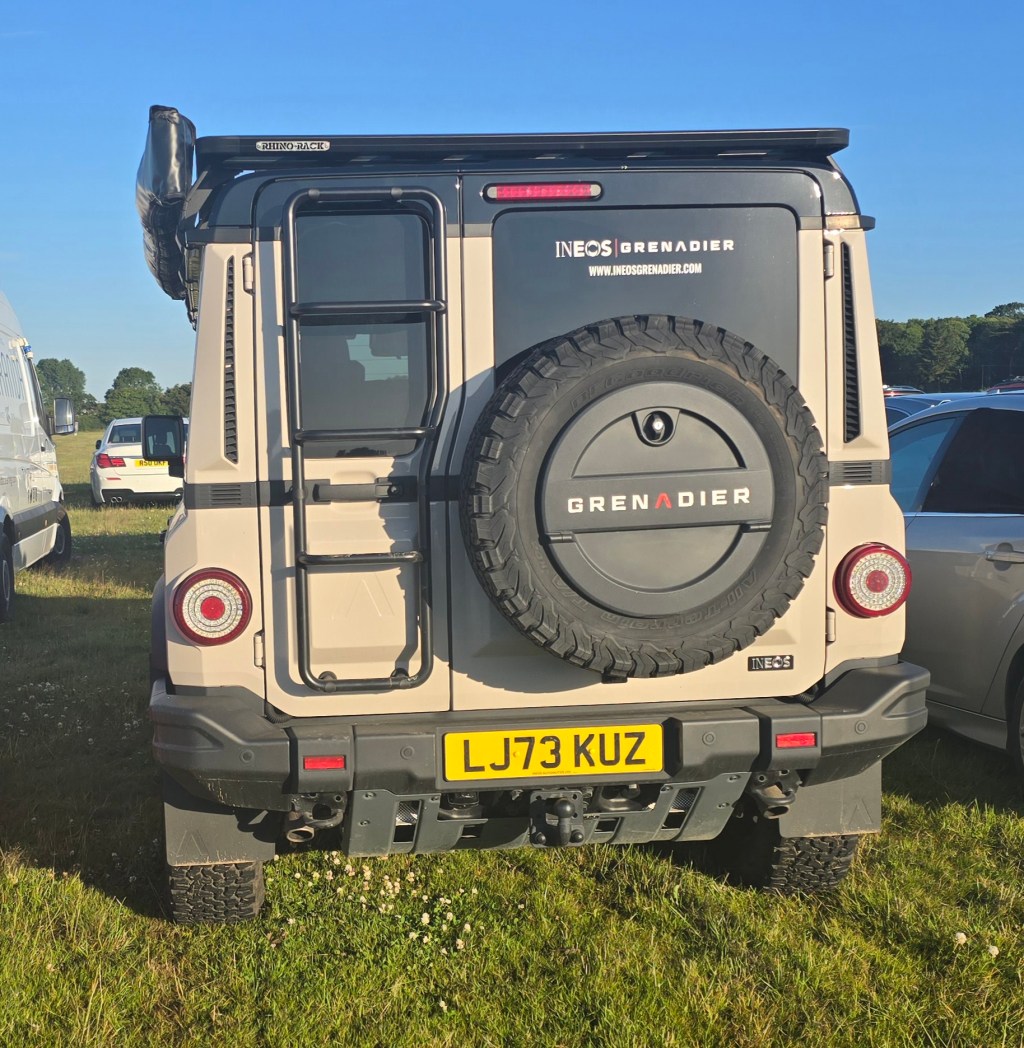
BYD in exclusive talks to buy the Grenadier’s French factory
BYD has confirmed exclusive talks to buy Ineos Automotive’s plant in Hambach, France. It builds about 30,000 Grenadiers a year. It would be the first time a Chinese carmaker has bought an existing European car plant, and BYD’s second EU factory after Szeged in Hungary, which is due to hit mass production in early 2027. Ineos plans to move Grenadier production to the US by 2028, since the US is about 70% of its sales. About 1,000 people work at Hambach, which opened in 1997 as Mercedes’ Smart plant. BYD has made no job promises yet, and works councils must be consulted first. Why it matters: China-built EVs face a 27.8% EU tariff, per reports. A French-built BYD could skip that wall.
EVs · Europe
Nearly 3 in 10 new EU cars in October were electric
Battery-electric cars took 29.8% of the EU market in October, with 279,799 sold, up 61.4% on a year ago. Petrol sales fell 30%. So far this year, EVs hold 23.4% (up from 16.4%), and hybrids lead at 36%. Chinese brands are charging hard: BYD’s EU registrations jumped 128% in October and Leapmotor’s 279%.
EVs · China
Li Auto halves its loss as deliveries rise 7.2%
Li Auto delivered 99,964 cars in the third quarter, up 7.2%. Revenue rose 5.4% to RMB28.8 billion (US$4.3 billion), and its net loss shrank by half to RMB309.7 million. It expects 110,000 to 115,000 deliveries in Q4. Next: the Li MEGA launches in right-hand drive in Thailand and Hong Kong in December, and the Li 6 reaches the Netherlands and Norway in early 2027.
Industry · Germany
VW asks 120,000 workers for a two-year pay freeze
Volkswagen opened wage talks with the IG Metall union in Emden on Tuesday. It wants a two-year pay freeze, an end to a bonus paid in cash or extra leave, and the option of longer hours without extra pay. The talks cover about 120,000 workers. The union has vowed to fight, and workers have threatened strikes from January. No date has been set for the next round.
Charging · Egypt
BYD’s 5-minute chargers are coming to Cairo
Egyptian developer Cred will install BYD Flash Chargers, rated up to 1,500 kW, at its projects around Cairo. BYD says they can take a compatible car from 10% to 70% in five minutes. Egypt’s EV fleet has tripled this year to about 19,000, and the country charges no customs duty on new fully electric imports. After Morocco, it is one of Africa’s first stops for the tech. No install dates yet.
Industry · Japan
Japan’s car output drops 5.7%, but Subaru bucks it
Japanese carmakers built 5.7% fewer vehicles at home in October, according to MarkLines data. Cuts to tiny kei cars hit hardest: Suzuki’s output fell 23.2%. Toyota Group was down 5.2%, Honda 6.8% and Nissan 7.5%. Subaru was the standout, up 14.9% to 52,288. That’s good news for Subaru fans in markets like Australia and Kenya, where its cars are a favourite.
Keep reading on Gridside
- GM CEO Search: Should an Outsider Replace Mary Barra?
- Ford’s $3B Battery Plant Fires Up With CATL Tech
- Chinese Car Ban Nears: Why Mercedes May Get a Pass
Your turn: Should GM and Ford build parts for military drones, or should carmakers stay out of the weapons business? Would it change whether you buy one? Tell us in the comments.
Tomorrow on Gridside: EV & Tech Day. The biggest battery and self-driving news, on the day Ford is due to pull the drape off its Le Mans Hypercar.
Know someone who’ll argue about carmakers building drones? Send them this and let the debate begin.
Sources
- AeroTime: Pentagon seeks US automakers’ help to build military drones
- CBT News: Pentagon looks to GM, Ford and suppliers to scale up drone production
- Fox Business: Pentagon reportedly in talks with GM, Ford
- National Museum of the USAF: Kettering Aerial Torpedo “Bug”
- Wikipedia: Kettering Bug
- Electrek: BYD in talks to buy Ineos’ French factory
- UNN: BYD seeks to open a second plant in Europe
- electrive: Battery-electric cars capture 30% of EU market
- ACEA: New car registrations, October 2026
- Li Auto: Third quarter 2026 results
- RTÉ/Reuters: Volkswagen seeks pay freeze and flexible hours
- EV Infrastructure News: BYD fast charge coming to Cairo
- MarkLines: Automotive news digest, Nov 24, 2026
Photo credits: Kettering Bug images via Wikimedia Commons (US Air Force photo for the featured image); Ineos Grenadier via Wikimedia Commons. All are file photos.


Leave a Reply