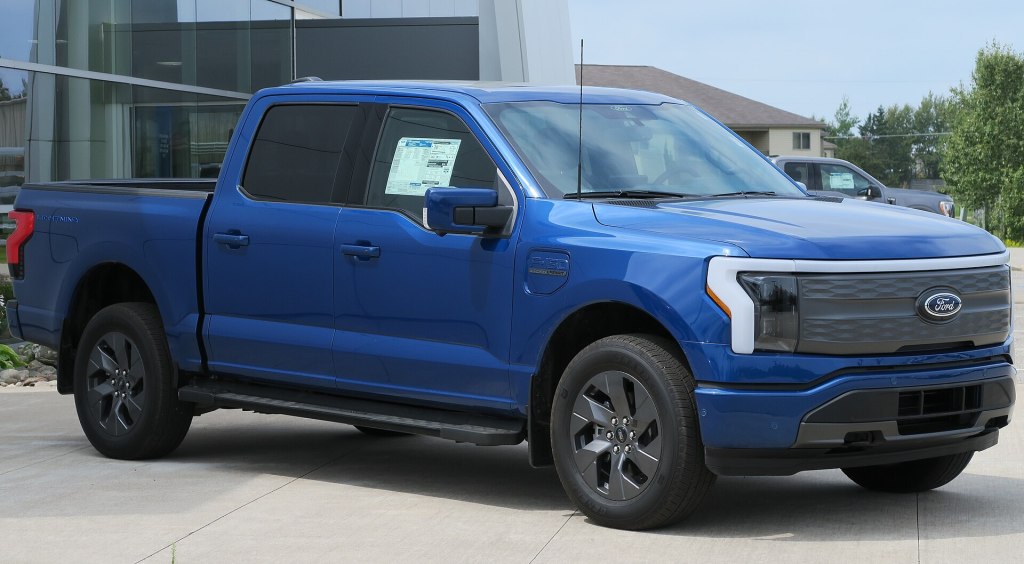
Forty battery cells a minute. That is the pace Ford’s new $3 billion plant in Marshall, Michigan, is built to hit, and it has quietly started making them. The cells use Chinese chemistry licensed from CATL, and they are headed for Ford’s next cheap electric pickup.
Your first stop for car news: the quick version here, plus a button on every story that takes you straight to the original report.
EV & Tech
Ford’s battery bet goes live.
EV Batteries
Ford’s Michigan plant is now shipping LFP cells
Ford has begun producing lithium iron phosphate (LFP) battery cells in the United States. The plant in Marshall, about 100 miles west of Detroit, started production in October, according to a CBT News report citing CNBC. It is now sending cells to prototypes of the 2027 Ford Fathom, which is due to launch in the fourth quarter of 2027.
The site is huge: roughly 2 million square feet and a $3 billion price tag. At full tilt it can turn out 40 cells per minute, or about 20 gigawatt-hours of capacity a year. That is smaller than Ford first planned, and the real ramp-up comes in 2027.
Here’s the twist. The chemistry isn’t Ford’s own. It is licensed from CATL, the Chinese company that is the world’s biggest battery maker. Ford owns and runs the factory; CATL supplies the know-how. That arrangement has drawn scrutiny in Washington, and Transportation Secretary Sean Duffy wrote to Ford CEO Jim Farley in September about the plant’s CATL ties.
Why LFP matters to you. LFP cells skip nickel and cobalt, two of the priciest and most politically tangled materials in a battery. They hold a bit less energy for their weight, so range per pound is lower. In return they are cheaper, tolerate frequent charging to 100%, and tend to last a very long time. That is the recipe for an affordable daily-driver EV, not a range-record halo car.
Think of it like home cooking versus takeout. For years, U.S. automakers mostly bought cheap LFP packs from Asia. Ford is now cooking the same dish in its own kitchen, using a borrowed recipe. That cuts shipping, cuts exposure to import tariffs, and gives Ford more control over cost, which is exactly what a budget pickup needs.
For a rough sense of scale: 20 gigawatt-hours is enough for around 300,000 packs a year if each pack holds about 65 kWh. Ford hasn’t said how big the Fathom’s pack will be, so treat that as a ballpark, not a forecast.
What happens next? Watch two things. First, whether the Fathom lands at a price that actually undercuts gas trucks. Second, whether Washington’s unease with the CATL license turns into rules that limit it. If neither trips Ford up, Marshall could become the template for how U.S. brands build cheap EVs at home.
Quick take (opinion): Licensing Chinese battery tech to build it in Michigan is the most practical EV move a Detroit brand has made in years. It’s awkward politically, but it puts real jobs and cheaper trucks ahead of slogans.
$3B
Cost of Ford’s Marshall battery plant
20 GWh
Yearly cell capacity at full speed
105.88 km/h
La Jamais Contente’s 1899 electric record
206.8
Manheim used-car value index, mid-November
History Corner
The first car past 100 km/h was electric.
Car History
La Jamais Contente: the “Never Satisfied” torpedo of 1899
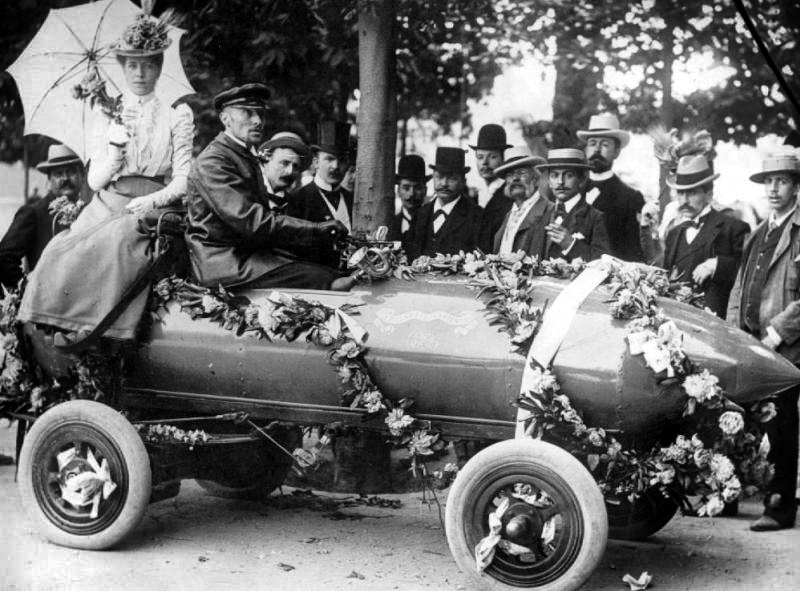
Picture a flat road at Achères, just outside Paris, in the spring of 1899. A red-bearded Belgian sits perched on top of a gleaming metal torpedo, his head and chest sticking out into the wind. There is no engine roar. Just a hum, the crunch of tyres, and then a speed no human had ever driven on a road: 105.88 km/h, about 65.8 mph.
The driver was Camille Jenatzy, nicknamed “Le Diable Rouge,” the Red Devil, for that beard. His car was called La Jamais Contente, “The Never Satisfied.” And it ran on batteries.
Most people don’t know this was the climax of a speed duel between two electric cars. Jenatzy’s rival, Count Gaston de Chasseloup-Laubat, had set a mark of 92.78 km/h on 4 March 1899 in a Jeantaud electric. The two traded records until Jenatzy smashed through 100 km/h. Sources disagree on the exact day: most say 29 April, some say 1 May.
The engineering was wild for its time. The body was made of partinium, a light alloy of aluminium, tungsten and magnesium, shaped like a torpedo to cheat the wind. Two direct-drive motors made about 50 kW combined, roughly 68 hp. The batteries came from Fulmen, and the tyres from a young company called Michelin.
Jenatzy didn’t stop at electrics. In 1903 he won the Gordon Bennett Cup in Ireland driving a Mercedes, a huge victory for the German brand. He died in a hunting accident in Belgium in December 1913.
Why it still matters: the very first road car to break 100 km/h was battery-powered, and it relied on light materials and low drag, the same tricks EV engineers chase today. As Ford starts building its own battery cells, it’s worth remembering that electric speed is not new. It just took 125 years for the batteries to catch up. The car itself survives at the national car museum in the Château de Compiègne, France.
New Models
LA’s lights come on.
Hyundai Elantra
The new Elantra makes its LA debut
Hyundai took the wraps off the next-generation Elantra this morning at AutoMobility LA: a 2027 gas sedan, with a 2028 hybrid to follow. Hyundai is still keeping U.S. power, mpg and price under wraps. The Korean-market twin, the Avante, uses a 147-hp 2.0-liter gas engine and a 155-hp hybrid, and those are expected to carry over. Big screens and an AI voice assistant are on the menu in Korea, but not yet confirmed for the U.S.
LA Auto Show
Rivian R2 and a 1,139-hp Porsche headline the public days
The LA show opens to the public tomorrow and runs through November 29. EV fans should head for the Rivian R2, which offers up to 656 hp, 0-60 mph in 3.6 seconds and an EPA-estimated 330 miles of range, with public test drives planned. Porsche brings the Cayenne Turbo Electric: up to 1,139 hp and 0-60 in 2.4 seconds. Acura shows its Nexera Vision concept.
Industry & Prices
Used prices hold, delivery gets faster.
Used Car Prices
206.8
Wholesale used-car values freeze in place
Cox Automotive’s Manheim index sat at 206.8 in mid-November, flat with October and up just 0.7% on a year ago. Dealers have only 27.9 days of wholesale supply. Compact cars rose 10% year over year and used EVs gained 3.4%, while luxury cars, SUVs and pickups are still cheaper than last year. With the 10-year Treasury above 5%, borrowing costs, not sticker prices, are the bigger hurdle for buyers.
Car Buying
Carvana brings same-day delivery to Massachusetts
Buyers in Boston, Worcester, Springfield, Cambridge and Lowell can now get a Carvana car delivered the same day they buy it. Sellers can book a same-day pickup or drop-off right after their online appraisal. The service began in Arizona and now covers select markets in more than 20 states.
Motorsport
Vegas: nothing to clinch, everything to prove.
Las Vegas Grand Prix
F1 hits the Strip with both titles already decided
Formula 1’s Las Vegas race this Saturday night is Round 21, and both crowns are gone: Kimi Antonelli sealed the drivers’ title in Mexico City and Mercedes the constructors’ in Brazil. The fight now is for the places behind. Just 33 points cover Max Verstappen, George Russell, Lewis Hamilton, Charles Leclerc and Lando Norris, and Red Bull leads McLaren by 17 for third among the teams. Cadillac is expected to confirm Valtteri Bottas for 2027 this week.
Your turn
Should U.S. carmakers license Chinese battery tech if it means cheaper EVs built at home, or is that a risk not worth taking? Tell us in the comments. Tomorrow is Money & Industry day: the biggest business story of the week and what it means for your wallet.
Sources
- CBT News: Ford starts U.S. battery cell production
- CarAdvice: the first car to hit 100 km/h was electric; also Wikipedia, Grace’s Guide and Mercedes-Benz Classic archive
- Motor1: next-generation Hyundai Elantra US debut
- autoevolution: 2026 LA Auto Show preview
- CBT News: wholesale used-vehicle prices hold steady
- CBT News: Carvana expands same-day delivery
- Formula1.com: 5 storylines for the Las Vegas Grand Prix
Photo credits: Ford F-150 Lightning via Wikimedia Commons; La Jamais Contente by Jules Beau (public domain) via Wikimedia Commons.


Leave a Reply