Five minutes. That is how long BYD says its new Whale needs to go from 10% to 70% charge, roughly the time it takes your kids to argue about who sits in the back. The family minivan, the least glamorous car on the road, just picked up the most futuristic party trick at the Guangzhou Auto Show.
Your first stop for car news: the quick version here, plus a button on every story that takes you straight to the original report.
Car of the Week
BYD’s Whale makes the school run feel like the future
China · EV · Guangzhou Auto Show
BYD Whale: a 5.27-metre MPV with up to 900 km of range
BYD pulled the covers off the Whale on Friday, November 27, as the Guangzhou Auto Show opened its doors. It is the first flagship MPV in BYD’s Ocean family, and it is big: 5,270 mm long, almost 2 metres wide and riding on a 3,130 mm wheelbase.
Buyers get two flavours, both built on BYD’s second-generation Blade Battery. The plug-in hybrid promises more than 400 km of electric-only driving on China’s CLTC test cycle. The full battery-electric version claims more than 900 km. CLTC figures run generous, so expect less in real-world use, but even a big haircut leaves a lot of range for a seven-seat-sized van.
The headline trick is flash charging, the system BYD introduced in March. The company claims 10% to 70% in five minutes and 10% to 97% in nine. Even at -30°C, it says charging takes only three minutes longer. Up top sits a roof-mounted LiDAR, with extra cameras on the front fenders for BYD’s next-generation driver assistance.
Here is the memorable bit: if the claims hold, refilling a Whale on a fast charger could take less time than refuelling and paying for a petrol van at a busy station.
Why another BYD MPV? The current Dynasty Xia sold just 720 units in October, down nearly 64% year on year, even as BYD overall had its best month of 2026. The Whale is the fresh face meant to win back families.
Why it matters to you: BYD is aiming at the 300,000 yuan (about US$44,730) class, where buyers expect luxury. If it can deliver nine-minute near-full charges at that price, every rival family van suddenly looks slow at the plug.
Outside China: BYD has not announced export plans or overseas prices for the Whale yet, so for now it is a China launch. Watch whether flash charging hardware follows the car into Europe, Australia and other export markets, because the five-minute claim only counts if the charger exists.
What happens next: BYD says the Whale launches in the first quarter of 2027.
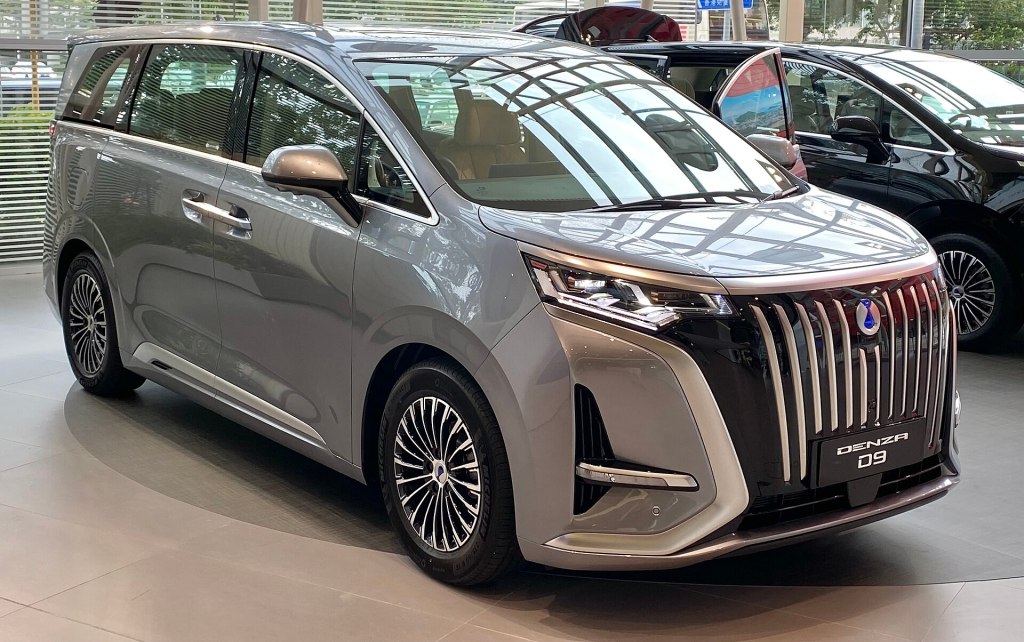
Quick take: (opinion) The minivan has been the car nobody brags about for 30 years. BYD may have found the cure: make it the fastest-charging thing in the car park. If the Whale’s five-minute claim survives real-world testing, the people-mover becomes the smartest EV buy for big families, not the dullest.
The Whale goes on sale in early 2027. Subscribe free and get the first real-world charging numbers in your inbox the day they land.
History Corner
The 1930s minivan millionaires bought by invitation only
Car History · USA · 1932–1946
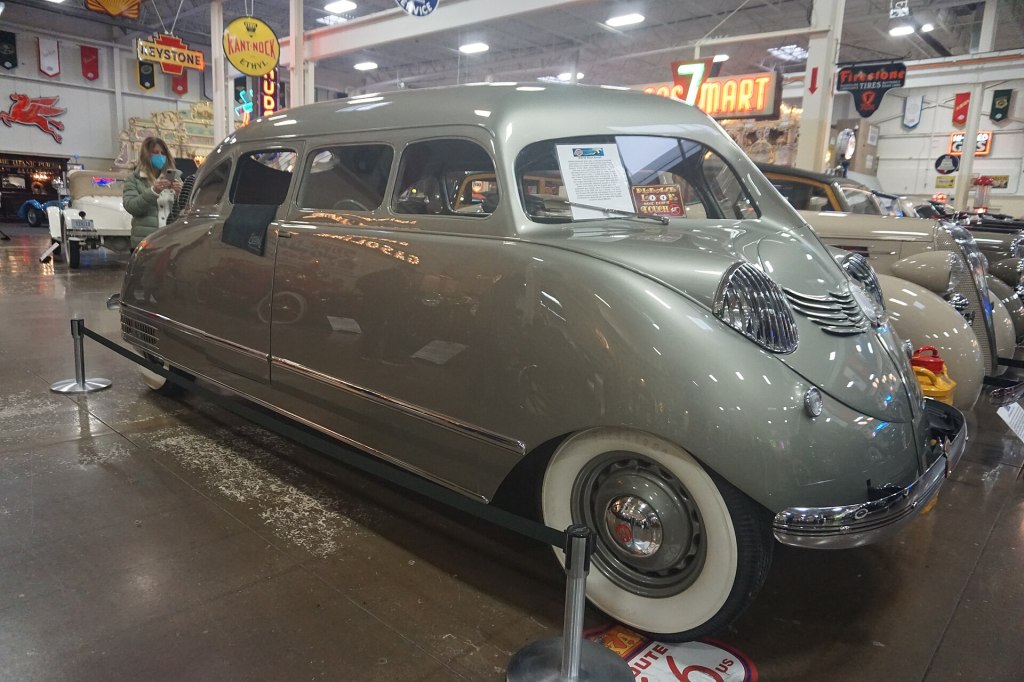
The Stout Scarab: a living room on wheels, 50 years early
Picture Detroit in the depths of the Great Depression. Cars are long bonnets and running boards. Then a smooth, beetle-shaped pod rolls past with no bonnet at all. Inside, the passengers are not facing forward. They are sitting around a table, playing cards.
That was the Stout Scarab, and it is often called the world’s first minivan. Its creator, William Bushnell Stout, was an aircraft man first. He was Packard’s chief aviation engineer from 1916 and pushed all-metal planes when most were wood and fabric. Ford bought his metal-airplane company, the outfit behind the Trimotor airliner. When Stout turned to cars, he designed one like a cabin, not a carriage.
Here is what most people don’t know. First, the engine was in the back. A Ford flathead V8 sat over the rear axle, turned around so the clutch faced forward, freeing the whole front for people and luggage. Second, only the driver’s seat was fixed. The other seats could be turned and rearranged around a fold-down table, decades before swivel seats became a minivan selling point.
Third, you could not just walk into a showroom and buy one. Scarabs were sold by invitation only at US$5,000, roughly US$100,000 in today’s money, when ordinary family cars cost a fraction of that. Only about nine were built, and buyers reportedly included tyre baron Harvey Firestone and the Wrigley chewing-gum family. Stout drove his own Scarab more than 250,000 miles.
Fourth, the story did not end in the 1930s. In 1946 Stout showed a new Scarab Experimental with a fibreglass body, which the Detroit Historical Society calls the first automotive fibreglass body. It never reached production. Historians also link the Scarab’s rear strut design to the Chapman strut later used by Lotus.
About five Scarabs are thought to survive, and the Detroit Historical Society holds both a 1935 car and the 1946 fibreglass prototype.
Why it matters today: Ninety years on, BYD’s Whale is chasing the same idea Stout had: a big, flat, flexible space for people, with the drivetrain tucked out of the way. Batteries in the floor finally make his dream layout easy. Stout was simply a battery chemistry too early.
By the numbers
5 min
BYD’s claimed 10–70% charge time for the Whale
900+ km
Claimed CLTC range of the electric Whale
810,592
Hondas and Acuras recalled over Takata airbags
9
Stout Scarabs believed built in the 1930s
Quick hits
Guangzhou, Qatar and two big recalls
China · Range-extender EV
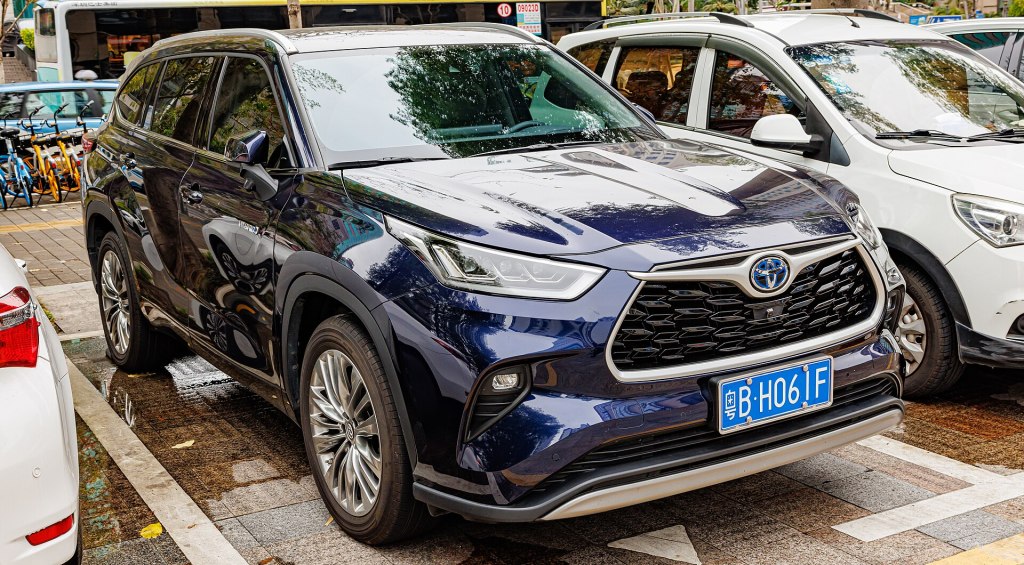
Toyota names its first range-extender: the Highlander 9X
We now have a name. GAC Toyota confirmed in Guangzhou that its first extended-range EV will be the Highlander 9X, debuting in the first quarter of 2027. The new detail is who built the brains: Huawei supplies the electric drive, driver assistance and cockpit software, while the battery was co-developed with CATL. The petrol engine only makes electricity. Local reports suggest over 1,000 km of combined CLTC range, though Toyota has not confirmed specs or price. Don’t expect it in the US: America gets a fully electric Highlander instead, with up to 320 miles of EPA range.
Formula 1 · Qatar
Antonelli tops both Qatar practices as Mercedes go 1-2
The new champion is not easing off. Kimi Antonelli led a Mercedes one-two in both Friday sessions at Lusail, with a best of 1:23.077 in FP2, 0.127 seconds clear of George Russell. McLaren’s Lando Norris and Oscar Piastri were next, with Max Verstappen fifth, half a second back. Red Bull’s Isack Hadjar was put under investigation for appearing to clip a mechanic’s foot leaving his pit box in FP1. Qualifying is today at 10:00 AM PT, 6:00 PM UK and 9:00 PM East Africa time.
USA · Recall
810,592
Honda recalls 810,592 cars as Takata airbags strike again
More than a decade on, Takata is still haunting Honda. The company is recalling 810,592 US vehicles: 2012–2013 Civic and CR-V, 2013 Accord, and 2013 Acura ILX and RDX. The front airbag inflators can rupture and spray metal fragments, a risk NHTSA ties to propellant breaking down after years of heat and humidity. Dealers will replace the inflators free, and owner letters are due December 18. These model years are common used imports in many markets, so owners anywhere should check their VIN with Honda.
USA · Recall
82,843 Ram 1500 Classics need a brake software fix
Stellantis is recalling 82,843 Ram 1500 Classic pickups from 2022–2024 because the ABS module software can misread the brake pedal. That can mean wrong brake-light behaviour, unintended movement, or stability control, AutoPark and forward collision warning switching off. Dealers will update the software free, with owner letters due January 14, 2027.
China · Industry
Mercedes sets up a new China venture to buy local parts
Mercedes-Benz is forming a new joint venture in Beijing to source car parts for its factory partnership with BAIC, according to a filing with China’s market regulator reported by Reuters. Mercedes-Benz China holds 70% and Beijing Benz 30%. The signal: facing fast-moving Chinese rivals, Mercedes wants a more local supply chain.
China · Australia · Design
Chery’s boxy Jetour R700 wears 712 LEDs and a Bangle touch
Chery’s Jetour brand showed the R700 off-roader in Guangzhou, a squarer, posher sibling to the G700. It swaps the external spare wheel for an octagonal rear storage box, and its four light units carry 712 dot-matrix LEDs between them. Former BMW design chief Chris Bangle consulted, alongside ex-JLR and ex-Mercedes designers. Powertrain details are not confirmed. Jetour is gearing up for Australia, with its first models due there in early 2027, though the R700 is not yet on that list.
Keep reading on Gridside
- Toyota Range-Extender EV: 400,000 a Year by 2028
- Peugeot 9X8 Axed as Stellantis Quits Factory Racing
- Ferrari Feud: Boss Calls Leclerc Hit ‘Unacceptable’
Your turn
Would five-minute charging get you into an electric minivan, or is the MPV still the car you would never be seen in? Tell us in the comments.
Tomorrow: Race Results & Week Ahead. Antonelli has topped every session so far, and the Qatar Grand Prix starts Sunday at 8:00 AM PT, 4:00 PM UK and 7:00 PM East Africa time. We will tell you who to watch.
Know someone who still swears minivans are boring? Send them this and settle it.
Sources
- CnEVPost: BYD unveils Ocean lineup’s first flagship MPV Whale
- Star News Korea: Guangzhou Auto Show opens
- Hagerty: The groundbreaking 1930s Stout Scarab
- Wikipedia: Stout Scarab
- Detroit Historical Society: William Bushnell Stout, automotive
- The Truth About Cars: The Stout Scarab
- CarNewsChina: Toyota Highlander 9X
- Electrek: Toyota confirms the Highlander 9X as its first EREV
- Crash.net: Qatar Grand Prix Friday practice results
- Formula1.com: Antonelli leads Russell in Qatar FP1
- Formula1.com: Qatar Grand Prix 2026 timetable
- Vehicle Service Pros: This week’s recalls, Nov 23–27
- Local 12: Stellantis recalls more than 82,000 vehicles
- Business Recorder (Reuters): Mercedes-Benz plans new China JV
- CarNewsChina: Chery unveils boxy Jetour R700
Photo credits: Denza D9, Stout Scarab and Toyota Highlander Hybrid file photos via Wikimedia Commons, credited in each caption.


Leave a Reply