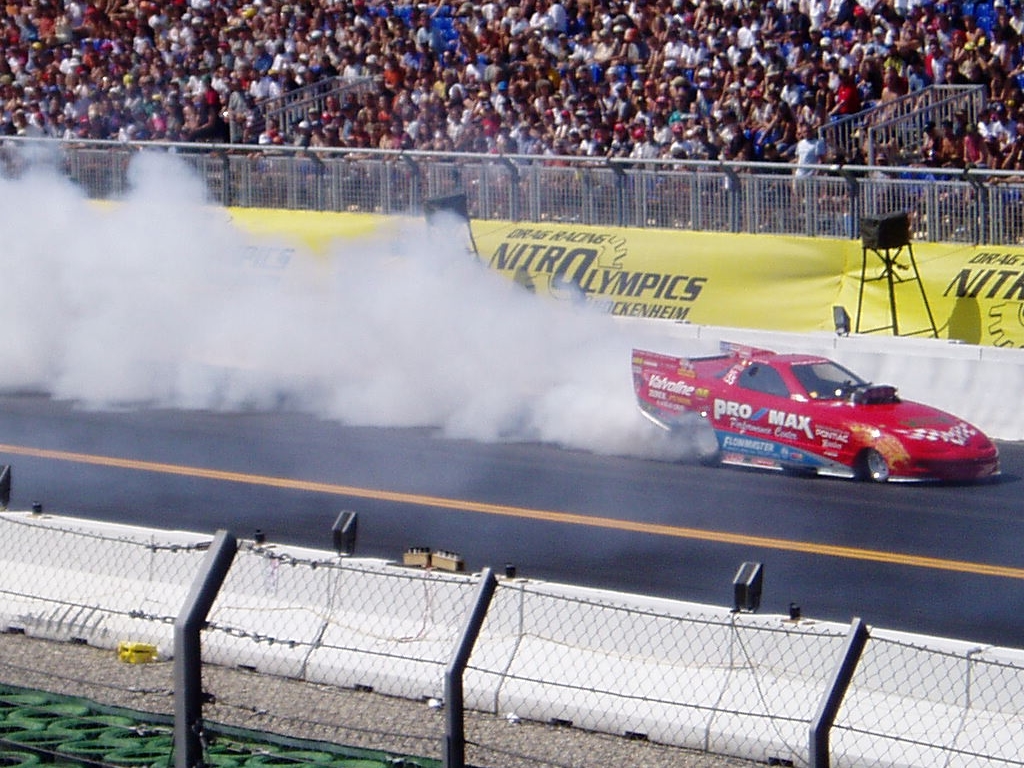
J.R. Todd woke up Sunday 104 points behind Matt Hagan. By sundown in Pomona he was the 2026 NHRA Funny Car champion, and his Kalitta team had swept both nitro titles. Drag racing’s season finale just delivered the biggest one-day comeback in Funny Car history.
Your first stop for car news: the quick version here, plus a button on every story that takes you straight to the original report.
Motorsport
104 points. One Sunday.
NHRA Finals, Pomona
J.R. Todd pulls off the impossible comeback
Here’s the math Todd faced on Sunday morning at the In-N-Out Burger NHRA Finals: 104 points down on Matt Hagan, with only one race day left. In NHRA, a round win is worth 20 points. He needed to win and he needed Hagan to stumble early. Both happened.
Hagan, the man everyone expected to lift the trophy, went out in round one. The other contender, Jordan Vandergriff, fell in round two to Alexis DeJoria. That left the door wide open, and Todd ran through it. He won every round and beat Daniel Wilkerson in the final with a 3.890-second pass at 331.20 mph, against Wilkerson’s 3.925.
It’s Todd’s second Funny Car title, eight years after his first in 2018. It was also his third race win of 2026 and the 25th of his career. NHRA called it the biggest single-day comeback in Funny Car history, and it’s hard to argue.
To put the speed in perspective: 331 mph is faster than a Bugatti Chiron’s top speed, and Todd got there in about a quarter of the time it takes you to read this sentence. The run covered 1,000 feet, roughly three football fields.
Why it matters: Kalitta Motorsports now holds both the Top Fuel and Funny Car crowns. NHRA says only three teams had done that before. For a sport that sells raw drama, a title decided by one heroic Sunday is the best advert it could ask for heading into the off-season.
History Corner
The hybrid was born in 1900.
Car History
Ferdinand Porsche’s “always alive” car
Paris, April 1900. Crowds at the World Exposition crowd around a carriage with no engine up front, no driveshaft and no chain. It just glides. The man behind it is a 24-year-old Austrian engineer working for Vienna coachbuilder Jacob Lohner & Co. His name is Ferdinand Porsche.
Most people know Porsche for the Beetle and the 911. Far fewer know that his career began with electric cars, and that he built one of the world’s first petrol-electric hybrids before the Wright brothers ever flew.
Fact one: the motors lived in the wheels. The Paris car had an electric motor inside each front wheel hub, about 2.5 hp apiece, with no gearbox or driveline at all. The catch was a battery weighing around 410 kg.
Fact two: he invented the “range extender” a century early. To beat that battery problem, Porsche built the Semper Vivus, Latin for “always alive.” Two De Dion-Bouton petrol engines spun generators that fed the hub motors. The engines never drove the wheels. That is a series hybrid, the same basic idea as today’s range-extender EVs. He also cut the battery from 74 cells to 44 to save weight. Even so, the car weighed about 1,200 kg. A production version, the Lohner-Porsche Mixte, followed in 1901.
Fact three: the first all-wheel-drive car was electric. Also in 1900, a British customer, E.W. Hart, ordered a racer with a hub motor in all four wheels. Porsche’s archive calls it the world’s first all-wheel-drive car. Its batteries alone weighed about 1,800 kg.
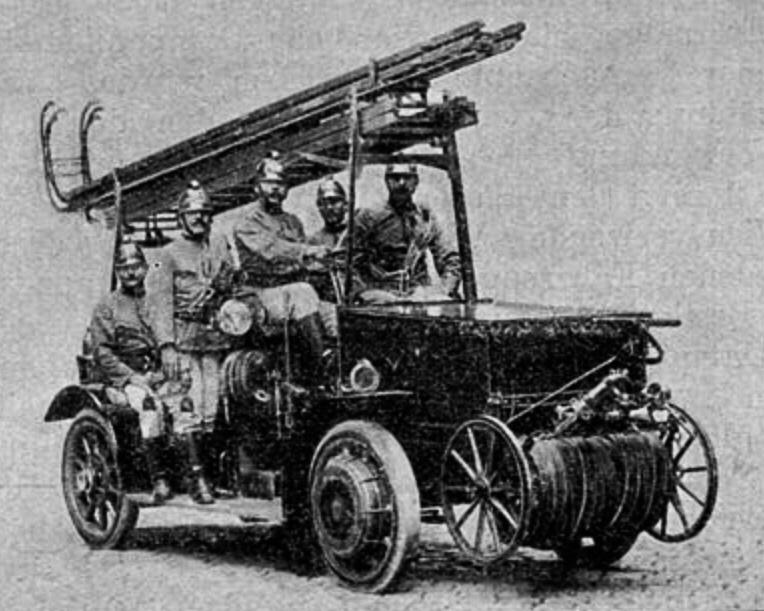
Fact four: the idea went to the Moon. Around 300 vehicles were built using the Lohner-Porsche system, including about 40 for Vienna’s fire service. Decades later, the wheel-hub motors on NASA’s Apollo lunar rovers drew partly on the same principle.
Why it still matters: when you read today’s stories about EV factories and range-extender SUVs, you are watching a 126-year-old argument play out. Porsche even built a working replica of the Semper Vivus, unveiled at the 2011 Geneva Motor Show, to prove how far ahead the young engineer was.
By the numbers
104
Points J.R. Todd erased on the final day
339 mph
Doug Kalitta’s winning Top Fuel speed
1M
Cybercabs a year Tesla’s new Berlin hall is designed for
1,033,632
Honda and Acura vehicles in NHTSA’s stop-start probe
More from Pomona
Champions, and a warning.
Top Fuel
Langdon’s second title comes 13 years after his first
Shawn Langdon locked up the Top Fuel crown by beating Josh Hart in round one. It’s his second championship, following 2013, and the fifth Top Fuel title for Kalitta Motorsports. Then his boss spoiled the party in the best way: team owner-driver Doug Kalitta beat Langdon in the final, 3.657 seconds at 339.19 mph. That’s Kalitta’s sixth win this year and 65th of his career.
Pro Stock & Bikes
Glenn repeats, Herrera makes it three
Dallas Glenn is back-to-back Pro Stock champion and won the race too, beating Matt Latino on a holeshot: Latino’s car was quicker, but Glenn left the line first. It was his third straight win. On two wheels, Gaige Herrera clinched his third Pro Stock Motorcycle title in four seasons, then won the final at 202.39 mph.
Safety
Haddock’s fiery crash reignites the tether fight
In Saturday qualifying, Terry Haddock’s Funny Car engine let go and the blower exploded. The body is tethered to the chassis to stop debris flying toward fans, so instead of blowing clear, it collapsed over him. Blinded, he hit the wall. He climbed out unhurt. Matt Hagan then publicly begged NHRA to scrap the tethers, arguing a driver who can’t see or steer is in more danger, and suggested keeping fans farther back instead.
Quick take (opinion): Hagan is right that the current setup failed its first real test. Protect the fans, yes, but not by trapping the driver inside a burning car.
EVs & Industry
Big bets, hard cuts.
Tesla Cybercab
€3B
Tesla confirms a Cybercab factory at Giga Berlin
Tesla will spend around €3 billion on a new hall north of its German plant, designed for up to 1 million Cybercabs a year. The plan: file for permits before the end of 2026, break ground in the first half of 2027 and start production in 2029. The catch is Europe’s rules. Electrek notes the EU still caps driverless models at 1,500 registrations per type per year, and the two-seater has no steering wheel. In the US, Tesla has started inviting select buyers to order one for $29,990 plus a $299 monthly autonomy subscription.
Renault
Renault swaps 1,000 desk jobs for 1,650 factory roles
Renault plans to cut up to 1,000 white-collar jobs in France through voluntary departures, Reuters reports, citing two sources. At the same time it wants to hire 1,650 factory operators at French plants by 2028 to keep up with growing EV demand. Fewer offices, more assembly lines: a clear sign of where the money is going.
Honda Probe
1 million Hondas probed over engines that won’t restart
US safety regulator NHTSA has opened an engineering analysis into 1,033,632 vehicles: the 2024 to 2026 Honda Odyssey, Passport, Ridgeline and Pilot, plus the Acura MDX. There are 701 complaints of engines failing to restart after auto stop-start shuts them off at a light. No crashes are mentioned. If you own one, keep an eye out for a recall notice.
Your turn
Should NHRA keep the body tethers to protect fans, or take them off to protect drivers? Tell us in the comments.
Tomorrow on Gridside Daily: New Metal, the freshest reveals and first drives.
Sources
- NHRA.com: Kalitta, Todd, Glenn, Herrera race to dramatic finishes at NHRA Finals
- Porsche Newsroom: the wheel-hub motor and the first Lohner-Porsche
- Kalitta Motorsports: Shawn Langdon wins 2026 Top Fuel championship
- Dragzine: NHRA Finals results from Pomona
- Autoweek (via Yahoo Sports): Hagan calls on NHRA to act on tethers
- Electrek: Tesla confirms €3B Cybercab factory at Giga Berlin
- Reuters: Renault to cut up to 1,000 white-collar jobs, add EV roles
- Reuters: US opens probe into more than 1 million Honda vehicles
Photo credits: Funny Car burnout at Hockenheim and 1907 Lohner-Porsche fire-fighting vehicle, both via Wikimedia Commons (freely licensed; see linked file pages for author and licence).


Leave a Reply