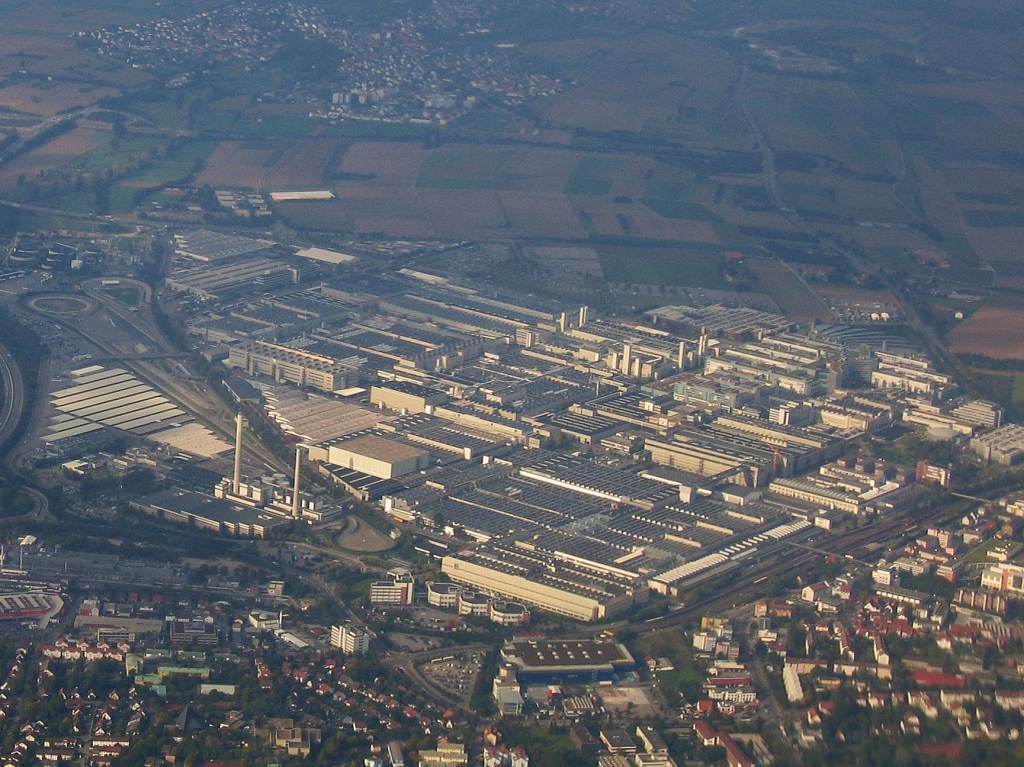
The company that built the first modern car has stopped spending money on its German car factories. Mercedes-Benz says its home plants cost too much to keep investing in, and two of them could close. In a twist of timing, today is also our History Edition: the true story of the 11-year-old girl whose name ended up on every one of those cars.
Your first stop for car news: the quick version here, plus a button on every story that takes you straight to the original report.
Money & Industry
The three-pointed star hits pause at home.
Mercedes-Benz
Mercedes freezes all investment in its German car plants
Mercedes-Benz has stopped all new investment in its German passenger-car factories, according to the Financial Times, which reported on an internal message from production chief Michael Schiebe. His point was blunt: at today’s costs, Germany doesn’t pay.
The numbers explain why. German labour can cost up to five times as much as in Eastern Europe. Mercedes expects its car business to return just 2% to 3% this year. China, once its golden goose, saw sales drop 31% in the third quarter. And EV demand has come in softer than the company planned for.
The people on the line are what’s at stake. Sindelfingen employs about 31,500 workers, Bremen about 10,500 and Rastatt about 7,000. Reports say two German sites are at risk, with some work possibly moving to Kecskemét in Hungary, where Mercedes already employs around 5,000. Schiebe reportedly warned staff in October that an assembly plant and a powertrain plant could shut unless costs came down.
Mercedes is also asking workers to put in 40 hours a week with no extra pay, five more than the sector norm. Talks with the IG Metall union and the works council are ongoing, and the unions have vowed to fight any closures.
Why it matters to you: nothing changes on dealer lots tomorrow. But a carmaker that can’t make money at home cuts somewhere, and that usually means fewer model variants, slower updates or more cars built in cheaper countries. Think of it like a restaurant moving its kitchen to a cheaper building across town: the menu might stay the same, but the people cooking it won’t. The effect will take years to show, but the Mercedes of the 2030s may say “Made in Hungary” far more often than “Made in Germany”, including the used imports that later reach buyers in Kenya and East Africa.
31,500
Workers at Sindelfingen, Mercedes’ biggest German plant
5x
How much more German labour can cost than Eastern Europe’s
2–3%
Expected 2026 return for the Mercedes car business
-31%
Mercedes sales in China, Q3 2026
Quick take: (opinion) Freezing investment is a negotiating tactic as much as a plan. But Mercedes isn’t bluffing about the maths, and German workers know it.
History Corner
The girl behind the star.
Car History
How an 11-year-old in Vienna gave Mercedes its name
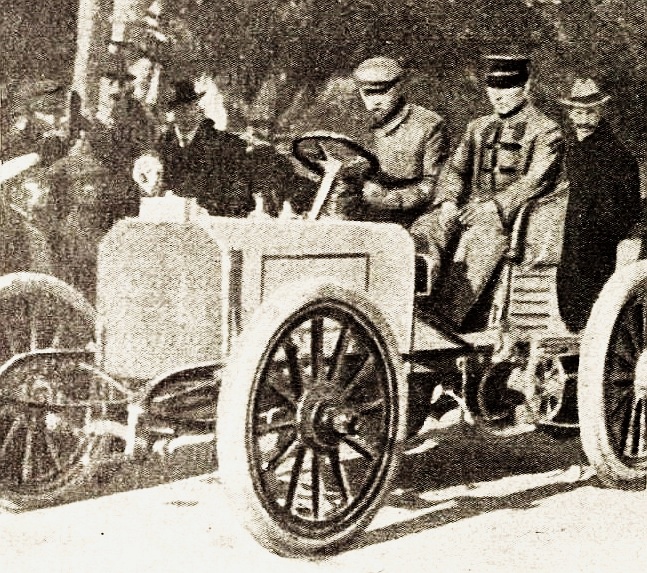
On 22 December 1900, a long, low racing car was delivered to a wealthy businessman on the French Riviera. Emil Jellinek had waited eight months for it. He had ordered 36 of them. And the name he insisted on painting into automotive history belonged to his daughter, then 11 years old.
Jellinek was an Austrian businessman who lived in Nice and loved speed. From 1899 he raced Daimler cars along the Côte d’Azur, but not under his own name. He entered as “Monsieur Mercedes”, borrowing the first name of his daughter Mercedes, born in Vienna in September 1889.
Here’s the part most people don’t know. In April 1900, Jellinek struck a deal with Daimler-Motoren-Gesellschaft and, about two weeks later, ordered 36 cars for 550,000 marks, roughly €3 million in today’s money. That giant order gave him real power. The car Wilhelm Maybach’s team built for him had a low centre of gravity, a light engine and a honeycomb radiator, ideas still found in cars today. Mercedes-Benz’s own archive calls it the first modern automobile.
In March 1901 the new car crushed the field at Nice Week. A leading French motoring figure declared that the “Mercedes era” had arrived, and he was right. Daimler applied to trademark the name “Mercedes” in June 1902, and it was registered that September. A year later Jellinek went one step further and legally became Emil Jellinek-Mercedes. He remarked that it was probably the first time a father had taken his daughter’s name.
Mercedes herself had a short and largely private life. She married Baron Karl Schlosser in Nice in 1909, later married Baron Rudolf Weigl, and died in Vienna in February 1929, aged just 39. A photo of her sitting in a Mercedes, taken around 1906, only surfaced in 2012.
Why it still matters: a 125-year-old brand built on one customer’s daring order is now arguing over whether it can afford to build cars in its own country. The name came from a family in Nice and Vienna. Where the cars come from next is suddenly an open question.
Recalls
Check your VIN this weekend.
BMW Recall
720,796 BMWs told to park outside, again
BMW is recalling 720,796 older models, including 2012–2018 3 Series, 5 Series, X1, X3, X4 and Z4, because water can get into the electric water pump’s connector and cause a short circuit and fire. It replaces a 2024 recall for the same problem, so the first fix wasn’t enough. Owners are told to park outside until it’s repaired, and the new remedy is still being worked out. Letters go out in December.
Honda & Acura
635,808 Pilots, MDXs and TLXs can lose power steering
Honda is recalling 635,808 vehicles, the 2023–2025 Honda Pilot, 2022–2024 Acura MDX and 2021–2025 Acura TLX, because the power steering software can drop into a failsafe mode and cut steering assist. The wheel still turns, but it suddenly gets heavy. Dealers will reprogram the control unit for free.
Toyota Tundra
About 300 bad camshafts, 62,000 trucks to check
Toyota is recalling about 62,000 non-hybrid Tundra pickups from the 2022–2023 and 2025–2026 model years. One supplier batch of camshafts was made wrong and could break, cutting power at higher speeds. Toyota thinks only about 300 bad parts were fitted, but every truck gets inspected, and faulty camshafts are replaced free. Owners will hear by mid-January.
EVs & New Models
Pricier Teslas, a boxier Kona.
Tesla Model Y
+$8,000
Tesla quietly kills the $41,990 Model Y AWD
The cheapest all-wheel-drive Model Y has vanished from Tesla’s US configurator after just over nine months, with no announcement. Dual motors now start with the Premium AWD at $49,990, about 19% more. The base rear-drive car stays at $39,990. Meanwhile, the Chevy Equinox EV AWD starts around $40,295 and the Mustang Mach-E AWD around $40,795, so shoppers who need four driven wheels now have cheaper options.
Tesla & SpaceX
A SpaceX–Tesla merger could come in December
Bloomberg reports that SpaceX and Tesla are moving toward a merger that could be announced as early as next month, though regulators may balk over SpaceX’s defence contracts and Tesla’s reliance on China. The backdrop isn’t rosy: US EV registrations fell 44% in September versus a year earlier, with Tesla down 27%, while Rivian grew its share to 7.6%.
Hyundai Kona
An all-new, boxier Kona is coming, and the EV may survive
Hyundai is skipping a facelift and going straight to a third-generation Kona, codenamed SX3, with test cars spotted in the US, Europe and Korea. Expect a more upright, Santa Fe-style look and possibly a rugged XRT version. Earlier reports said the electric Kona would be dropped, but a Korean prototype looks electric, with a return possible in 2027 or 2028. Hyundai hasn’t confirmed specs.
Your turn
Would you pay more for a Mercedes that’s still built in Germany, or does “Made in Hungary” change nothing for you? Tell us in the comments.
Tomorrow: Car of the Week & Culture, with one irresistible machine and the stories car fans are talking about.
Sources
- Carscoops: Mercedes stops German factory investment (citing the Financial Times)
- Mercedes-Benz Group: 120 years of the Mercedes brand name
- Mercedes-Benz Classic Archive: Mercedes Jellinek
- Mercedes-Benz: Emil Jellinek
- Vehicle Service Pros: NHTSA recalls, Nov. 9–13
- Toyota Newsroom: Tundra recall
- Electrek: Tesla kills $41,990 Model Y AWD
- Jalopnik: SpaceX–Tesla merger
- Electrek: Hyundai overhauling the Kona
Photo credits: Mercedes-Benz Sindelfingen plant via Wikimedia Commons (Panoramio, CC BY-SA); Mercedes 35 hp, Nice 1901, via Wikimedia Commons (public domain).


Leave a Reply