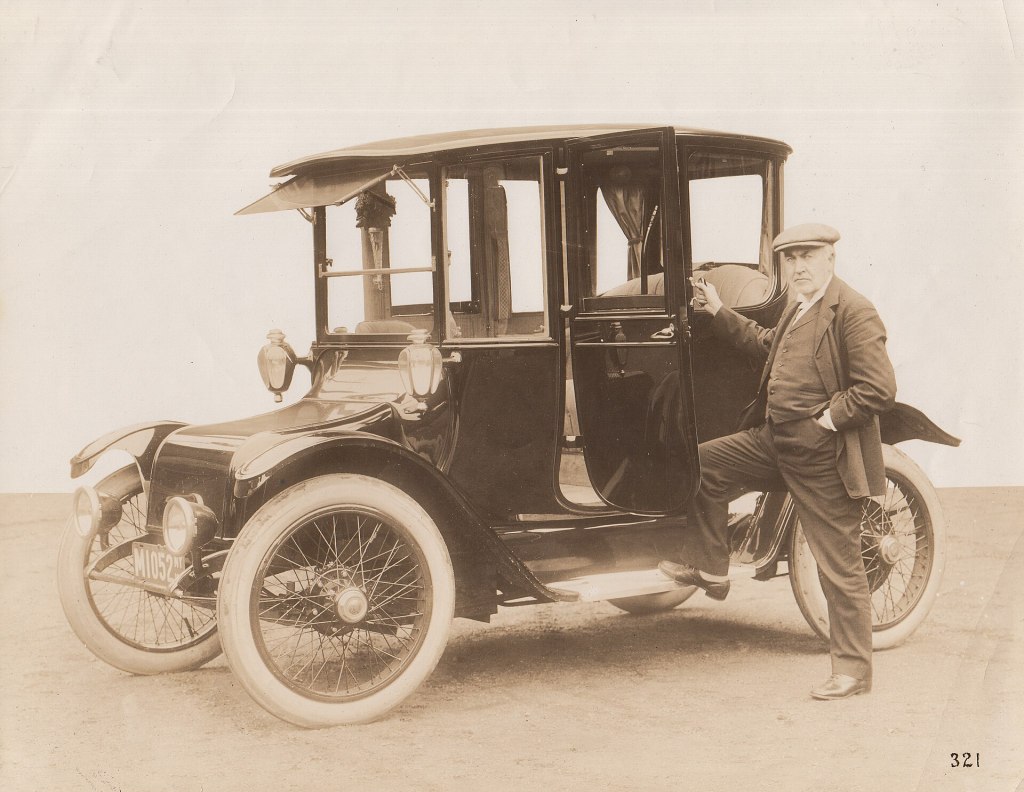
$28,350. That is what Ford wants for its new electric pickup, and it opened the waitlist this week. Back in 1914, Henry Ford promised Americans a cheap electric car too, with Thomas Edison as his partner. That one never made it. Here is why this one might.
Your first stop for car news: the quick version here, plus a button on every story that takes you straight to the original report.
EV & Tech Day
The sub-$30K truck is real.
Ford Fathom
Ford opens preorder invites for its $28,350 Fathom EV pickup
Ford has started taking sign-ups for preorder invites on the Fathom, its new small electric pickup. The standard-range model starts at $28,350. Add the $1,595 destination fee and you still land under $30,000.
Don’t reach for your wallet yet. This is a list, not a deposit. Real preorders open in early 2027, and the first trucks will be built at Ford’s Louisville Assembly Plant in Kentucky, with deliveries expected later in 2027. A Ford spokesperson says there is no change to that plan.
What do you get? The Fathom sits on Ford’s new Universal EV platform, a clean-sheet design built to cut cost. The battery is lithium iron phosphate (LFP), with no cobalt and no nickel, and the pack doubles as the floor of the truck. That keeps weight low in the chassis, which helps handling. Ford is aiming for 0–60 mph acceleration in the same range as a Mustang EcoBoost.
The equipment list reads like a much pricier car. Every Fathom gets BlueCruise hands-free highway driving, a big touchscreen, Apple Maps built in, a phone-as-key, plus Apple CarPlay and Android Auto. It has a Tesla-style NACS charging port and bidirectional charging, so in theory it can power things outside the truck.
The big unknowns are range and towing. Ford hasn’t announced either. It also calls the Fathom “midsize,” but prototypes look closer in size to the compact Maverick.
Why it matters to you: Ford makes two bold claims. It says the Fathom has more passenger room than a Toyota RAV4, and that it will cost less to own over five years than a three-year-old used Tesla Model Y. If those hold up, the cheapest way into a new EV in America could be a pickup. Think of it as a Maverick that never visits a gas station. For buyers who skipped EVs because the cheapest options cost $40,000 or more, that is the headline.
The timing is pointed. U.S. electric car sales are down about 29% this year, while hybrids are growing. Ford is betting that price, not range, is what keeps buyers away.
$28,350
Ford Fathom starting price
753 mi
BMW i3 50L on one charge
10%
Volvo EX60 output vs. target
1914
Year Ford first promised an electric car
History Corner
Ford’s first cheap EV died in 1914.
Car History
The Henry Ford and Thomas Edison electric car nobody remembers
Picture the Highland Park plant in Michigan, around 1914. While Model Ts pour off the world’s most famous assembly line, a strange little car hums quietly across the yard. No engine noise. No crank. It steers with a tiller, like a boat, and its batteries sit under the seat. Behind the wheel is Fred Allison, the Ford engineer who designed its electric motor.
Most people know Henry Ford as the man who put America behind a gasoline engine. Far fewer know he spent years trying to build an affordable electric car, with the most famous inventor alive.
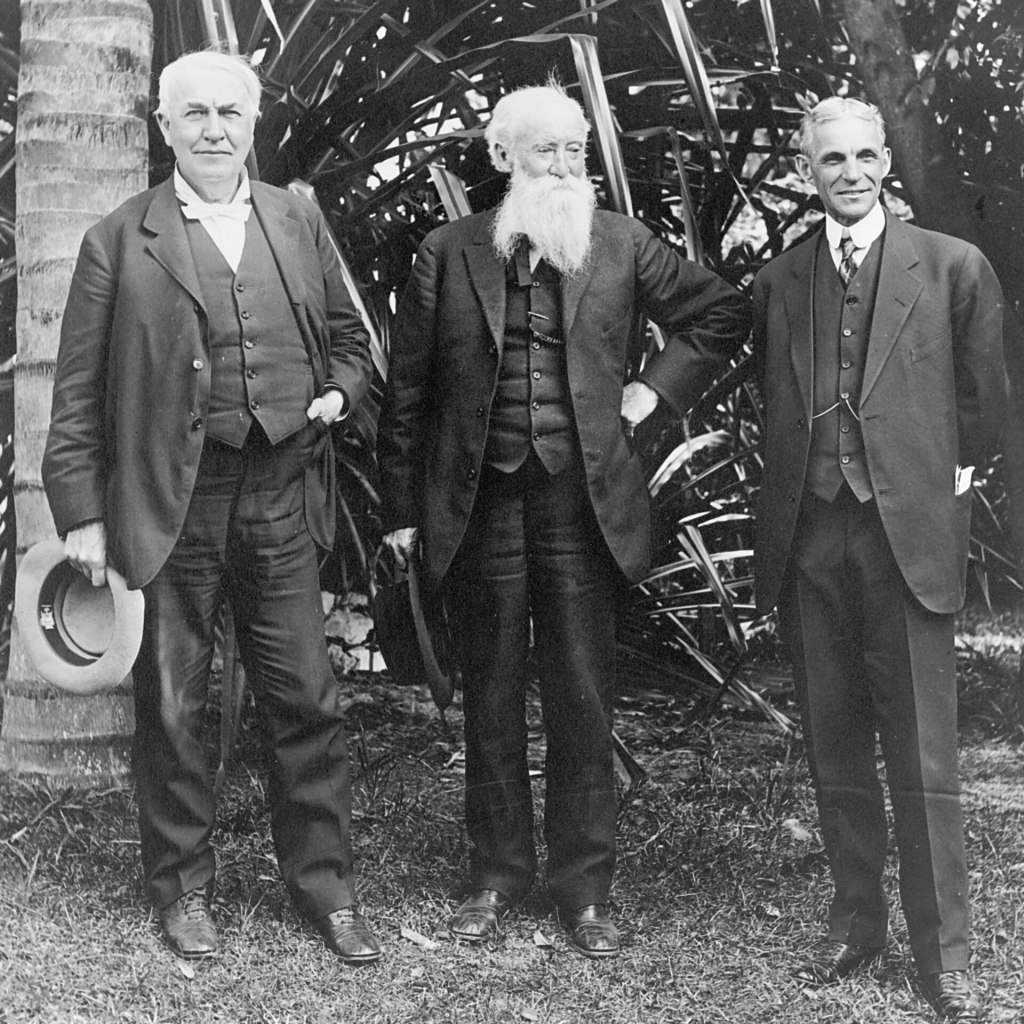
Fact one: Ford once worked for an Edison company. Early in his career, Ford worked for the Edison Illuminating Company in Detroit, and Thomas Edison encouraged his car-building plans. The two became close friends.
Fact two: Ford announced it in the newspaper. On January 11, 1914, Ford told The New York Times that he and Edison had been working on a cheap, practical electric car for years, and that he hoped to start building it within a year.
Fact three: there were real prototypes. At least two were built. The first, finished in late 1913, was the tiller-steered car. The second borrowed a Model T frame, suspension and steering wheel.
Fact four: the battery killed it. Ford insisted on Edison’s nickel-iron batteries, and only those. They were tough and long-lasting, but they couldn’t deliver the power a car needed. According to Ford family historian Ford Richardson Bryan, Ford had already bought close to 100,000 of them before it became clear they would not work. The project quietly faded. (You may hear a legend that oil interests sabotaged it. There is no solid evidence for that.)
Why does it still matter? Read this week’s Fathom news again. A cheap electric Ford, built around a battery chemistry chosen for cost and durability. The battery was the problem in 1914, and it is still the whole game in 2026. This time, LFP cells can do the job Edison’s could not.
New Models & EVs
Bigger, faster, farther.
BYD Seagull
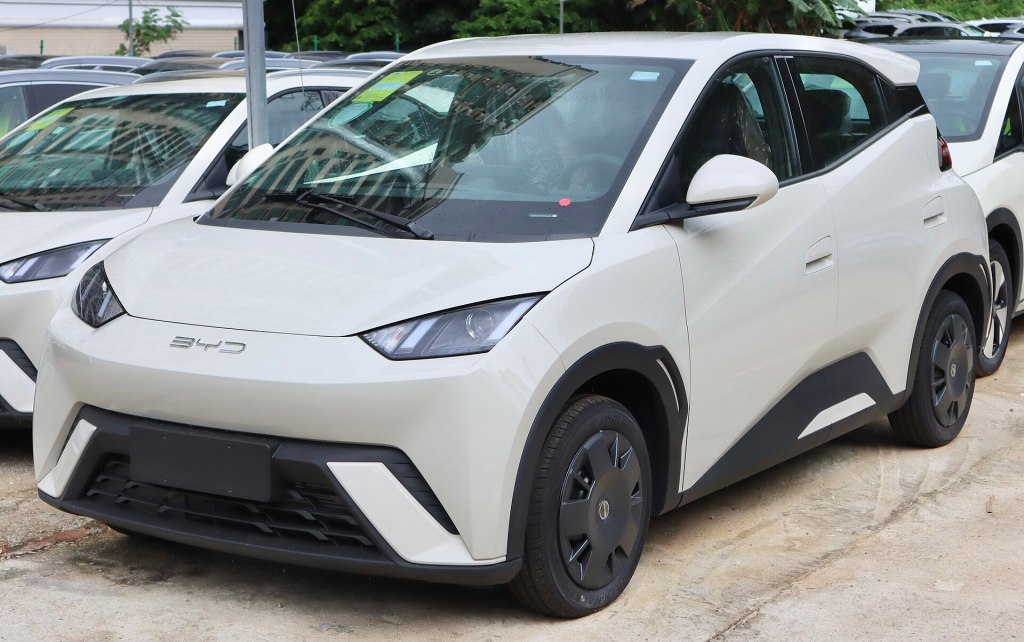
BYD’s new Seagull grows up and gets 5-minute charging
BYD will launch the updated Seagull on October 20 at the Zhengzhou International Circuit. The tiny city car is no longer tiny: it is 425 mm longer, switches to rear-wheel drive, and its motor jumps from 75 hp to 127 hp. Range is up to 420 km on China’s CLTC test, and top trims get BYD’s 1,500 kW Flash Charging, rated at 10–70% in about five minutes. Price is unconfirmed; rumors point to around 85,000 yuan (about $12,500), up from 69,900 yuan today. Abroad, it should arrive as a version of the Dolphin Surf or Dolphin Mini.
BMW i3
753 mi
BMW’s new i3 drives 753 miles without plugging in
BMW ran an endurance test on the long-wheelbase i3 50L, the China-market version, and covered 1,213 km on a single charge across highway, city and rural roads. It averaged 8.8 kWh per 100 km from a 113.4 kWh battery. BMW calls it a brand record, not a world record, and real owners won’t drive this gently. For context, the U.S. 2027 i3 is rated at up to 468 miles and starts at $61,500. That is roughly New York to Detroit and most of the way back, on one charge.
Volvo EX60
Volvo’s EX60 is stuck in first gear
Volvo has told U.S. dealers that EX60 deliveries are delayed, with meaningful numbers not expected until early 2027. Its Torslanda plant in Sweden is building about 10% of its target of 2,000 cars a week. The culprits are new manufacturing methods: giant one-piece castings and a battery built into the body structure. Volvo says quality and safety aren’t the issue. Europe gets priority. When it does land, the EX60 starts at $58,400, with up to 330 miles of EPA range on current versions.
Quick take (opinion): Range records make headlines, but a $28,350 truck you can actually buy beats a 753-mile car you can’t. Affordability, not range, is the EV fight that matters now.
Self-Driving & Industry
Robots, raids and road safety.
Tesla Safety
Tesla report says driver assist was engaged in a fatal New Jersey crash
In August, a 2021 Model Y on Route 55 in Vineland, New Jersey, crossed a grass median and hit an oncoming Chevrolet SUV head-on, killing its 68-year-old driver. Police described it as a driver losing control. But Tesla’s federal crash report marks Autopilot or Full Self-Driving as “verified engaged,” with a logged speed of 37 mph. Important caveat: the rule counts any engagement within 30 seconds of impact, so it doesn’t prove the system was steering when the car left its lane. Tesla redacted the software version.
Cybercab vs. R2
Tesla’s Cybercab assembly boss jumps to Rivian
Jody Kerns, who ran final assembly for Tesla’s steering-wheel-free Cybercab at Giga Texas, is leaving to run R2 assembly at Rivian’s plant in Normal, Illinois. He is the second Cybercab launch leader to exit this year. The move comes weeks after paid Cybercab rides began in Austin on September 3, and as federal regulators press Tesla to prove a car with no wheel or pedals meets safety rules. Rivian built 19,751 vehicles last quarter.
Slate Auto
Slate opens its first test-drive center, in an old Tesla store
Startup Slate Auto has opened its first test-drive and experience center at 1053 W Grand Ave on Chicago’s Near West Side, in a building that used to be a Tesla store. Slate’s back-to-basics electric truck is another sub-$30,000 contender, listed by Electrek at $24,950 with 205 miles of range. With the Fathom coming, the cheap EV pickup is suddenly a real fight.
Your turn
Your turn: Would you buy a $28,350 electric pickup before Ford tells you its range, or does the range number decide everything? Tell us in the comments.
Tomorrow is Money & Industry Friday: the business stories that hit your wallet.
Sources
- Electrek: Ford opens preorder invites for the $30,000 Fathom EV pickup
- National Law Review / Foley: Automotive Industry Update, Oct 14, 2026 (U.S. EV and hybrid sales)
- Jalopnik: How Henry Ford and Thomas Edison killed the electric car
- The Henry Ford: Fred Allison driving an experimental electric automobile, circa 1914
- Driven: We almost had a Ford Model T EV
- Electrek: BYD reveals the updated Seagull EV will launch next week
- Electrek: BMW’s new i3 just drove 753 miles on a single charge
- Electrek: Volvo delays EX60 deliveries in the US
- Electrek: Tesla confirms Autopilot/FSD was engaged in Vineland crash
- Electrek: Tesla loses Cybercab assembly lead to Rivian R2
- Electrek: Slate Auto opens first test drive and experience center in Chicago
Photo credits: Thomas Edison with a Detroit Electric car (public domain); Edison, Burroughs and Ford (public domain); 2023 BYD Seagull by User3204. All via Wikimedia Commons.


.jpg)
Leave a Reply