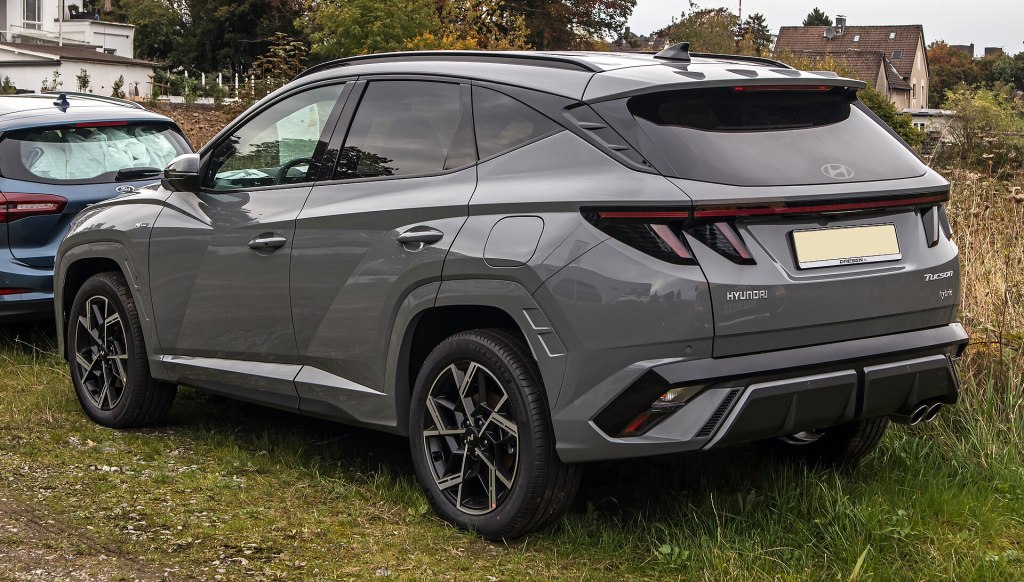
Hyundai just had its best-ever third quarter in America: 246,896 cars sold. Then it cut its targets for the year. Kia grew profit by almost a quarter and still missed forecasts by a mile. Welcome to the strangest money story in the car business right now.
Your first stop for car news: the quick version here, plus a button on every story that takes you straight to the original report.
Money & Industry
Record sales. Shrinking plans.
Hyundai & Kia Q3
Hyundai and Kia earn more, but warn of a harder road
Start with the good news. Hyundai’s operating profit rose 5.5% in the July to September quarter, to 2.68 trillion won, or roughly $2 billion. Kia did even better on growth: operating profit jumped 24.3% to 1.82 trillion won, about $1.36 billion, on revenue up 10.1% to 31.6 trillion won.
Now the catch. Hyundai’s revenue actually fell 3.4%, to 45.11 trillion won. Its global wholesale volume dropped 11.3% to 920,710 vehicles, because strikes at its Korean plants earlier in the year and fewer working days left it short of cars to sell. Net profit fell 24.2% to 1.93 trillion won, about $1.44 billion.
So Hyundai trimmed its plans. It now expects to sell 4.0 million vehicles worldwide in 2026, down from 4.16 million. Its target operating margin drops a full point, to 5.5%–6.5%.
Kia’s problem is different: it grew, just not as much as Wall Street hoped. Analysts expected about 2.41 trillion won of operating profit. Kia delivered 1.82 trillion. One big reason is logistics: costs linked to the war in the Middle East shaved roughly 600 billion won, around $450 million, off its profit. Kia expects that pain to last through the fourth quarter.
There is a bright spot that explains why both brands keep winning showroom battles. The US tariff on Korean cars is now 15%, down from 25%, which helped Kia’s numbers. And hybrids are flying. Kia’s US hybrid sales jumped 118% to 69,000 cars, and its US market share hit a record 5.8% for a quarter. Hyundai’s North American hybrid sales are up 56% over the first nine months.
Why it matters to you: Kia says it will keep incentives high to protect sales while those shipping costs bite. That points to deals on Kia showroom floors through the end of the year. Hybrids are the opposite story: demand is so strong that dealers are fighting over allocation, so don’t expect big discounts on a hybrid Tucson, Sportage or Sorento.
Think of it like a restaurant with a queue out the door and a broken supply truck: plenty of hungry customers, not enough food arriving in the kitchen.
246,896
Hyundai US sales in Q3, its best third quarter ever
+118%
Kia’s US hybrid sales jump, to 69,000 cars
~$450M
Kia profit lost to Middle East logistics costs
4.0M
Hyundai’s new 2026 global sales target, down from 4.16M
Quick take: (opinion) A carmaker that can’t build enough hybrids has a nice problem. Hyundai’s target cut is about supply, not demand, and that’s a far better place to be than most rivals this quarter.
History Corner
Before the Pony, there was a Ford.
Car History
How Hyundai learned to build cars from a Cortina, a Brit and a Giugiaro sketch
Ulsan, South Korea, 1968. In a brand-new factory, workers are bolting together Ford Cortinas from boxes of imported parts. The company doing it, Hyundai Motor, has existed for barely a year. Today the same company sells nearly a quarter of a million cars in America in three months. The road between those two moments is stranger than most people realize.
The first Hyundais weren’t really Hyundais. The company was founded in 1967 and started out assembling the Cortina under a deal with Ford. Hyundai’s own history admits the Cortina broke down a lot on rough Korean roads. That frustration pushed the company to design its own car.
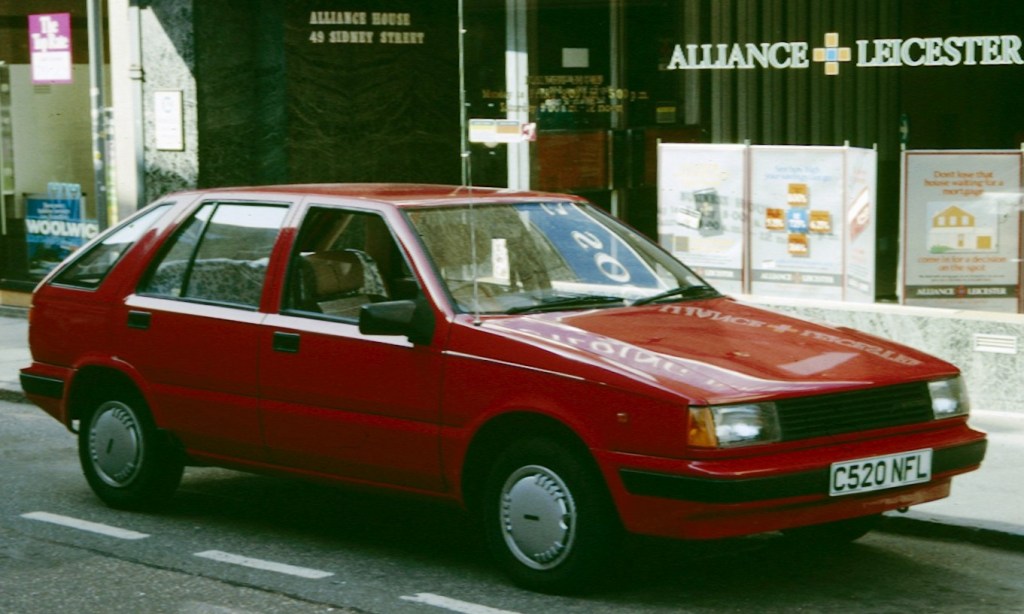
The man who ran production came from British Leyland. In 1974 Hyundai hired George Turnbull, former managing director of BL’s Austin-Morris division, on a three-year contract. He brought a small team of British engineers with him, and two Morris Marinas to study. That’s why some historians say the first Pony feels a bit like a Marina underneath.
The Pony was an international mix. Its body was drawn by Giorgetto Giugiaro of Italdesign, and its engine and running gear came from Mitsubishi. It debuted at the Turin Motor Show in October 1974 and went on sale in late 1975. It sold 10,726 units in its first year and grabbed 43.6% of the Korean market. The first export market wasn’t America or Europe. It was Ecuador, in 1976.
A lost Hyundai inspired a movie star. Giugiaro also drew a wedge-shaped Pony Coupe concept for the same 1974 show. Hyundai cancelled it in 1981, just before production. But its sharp lines fed into Giugiaro’s design for the DeLorean DMC-12, the Back to the Future car. The original concept no longer existed, so in 2023 Giugiaro and his son rebuilt it from scratch and unveiled it at Lake Como.
Why it still matters: When the Pony reached Canada as a 1984 model, Hyundai hoped for 5,000 sales and sold about 25,000. That same pattern of cheap, honest cars beating expectations is exactly what today’s record US quarter is built on.
Industry & Policy
Cash is king. Some kings are broke.
Volkswagen
VW freezes the electric Golf with no restart date
Volkswagen has fully suspended development of the all-electric ID. Golf, according to a memo reported by Reuters. VW brand boss Thomas Schaefer said the company simply can’t fund the program right now, and called it a hard call given what the Golf means to VW and its Wolfsburg home.
The timing says a lot: the freeze landed as Europe’s biggest carmaker posted its worst quarterly loss in more than a decade. The electric Golf was first meant for 2026, then slipped to 2028–2029, then 2030. Now even that looks shaky. Gas, hybrid and plug-in Golfs carry on in the meantime, and the works council insists the 2030 goal still stands.
UAW Profit Sharing
$13,000
GM workers line up their second-biggest payday ever
GM’s UAW workers could get checks of about $13,000 in 2027, second only to the record $14,500 paid in 2025. The formula pays $1,000 for every $1 billion of North American adjusted profit, and GM had already earned $10.7 billion there through September. Ford workers could get at least $10,500, a new high for Ford. Stellantis workers may get nothing: its North American margin of 1.2% sits below the 2% threshold.
Audi Tariffs
Audi may win a tariff break for its Georgia plant
Audi is asking Washington to cut the tariff on its European-built cars from 15% to 7.5%, and officials are expected to settle around 10%. The prize on offer is a planned $4 billion plant in Georgia that would employ about 4,500 people and build up to 200,000 SUVs a year, with construction starting in 2027. Audi says tariffs cost it about €1.2 billion in 2025, and a wider relief program for carmakers that invest in the US could follow within weeks.
Electric Vehicles
Used EVs are suddenly the hot ticket.
Used Car Prices
Used EVs now cost more than used gas cars
The average used EV sold for $32,533 in September, up 9.8% in a year, according to an iSeeCars study of over 1.5 million cars. That’s $579 more than the average used gas car. A year ago, EVs were $2,227 cheaper. They’re also selling faster: about 42 days on the lot versus almost 55 for gas cars. Higher fuel prices are driving the shift, so if you were waiting for cheap used EVs, that window is closing.
Your turn
Your turn: If Hyundai had built the 1974 Pony Coupe instead of cancelling it, would it be a bigger legend today than the DeLorean? Tell us in the comments.
Tomorrow: Car of the Week & Culture, with the weekend’s most irresistible machine.
Sources
- CBT News: Hyundai and Kia Q3 operating profit
- Hyundai Newsroom: Pony Coupe concept rebuilt with Giugiaro
- Hagerty: Hyundai Pony history
- Tech Times: VW freezes electric Golf development
- CBT News: GM workers eye $13,000 profit sharing
- CBT News: Audi seeks lower US tariffs
- CBT News: Used EV prices rise 9.8%
Photo credits: Hyundai Tucson Hybrid N Line via Wikimedia Commons; Hyundai Pony (1986) by Charles01 via Wikimedia Commons, CC BY-SA.


Leave a Reply