Eight thousand dollars. That’s the gap between Kia’s two electric crossovers for 2027, and it buys you more than a bigger badge. The 2027 EV6 starts at $37,900; the new EV3 starts at $29,890. Here’s which one actually makes sense, plus BYD’s coming Rolls-Royce rival and the Volkswagen that won Kenya’s very first Safari.
Your first stop for car news: the quick version here, plus a button on every story that takes you straight to the original report.
New Metal
Same family, $8,000 apart.
Kia EV6 vs EV3
2027 Kia EV6 holds at $37,900, but the EV3 undercuts it hard
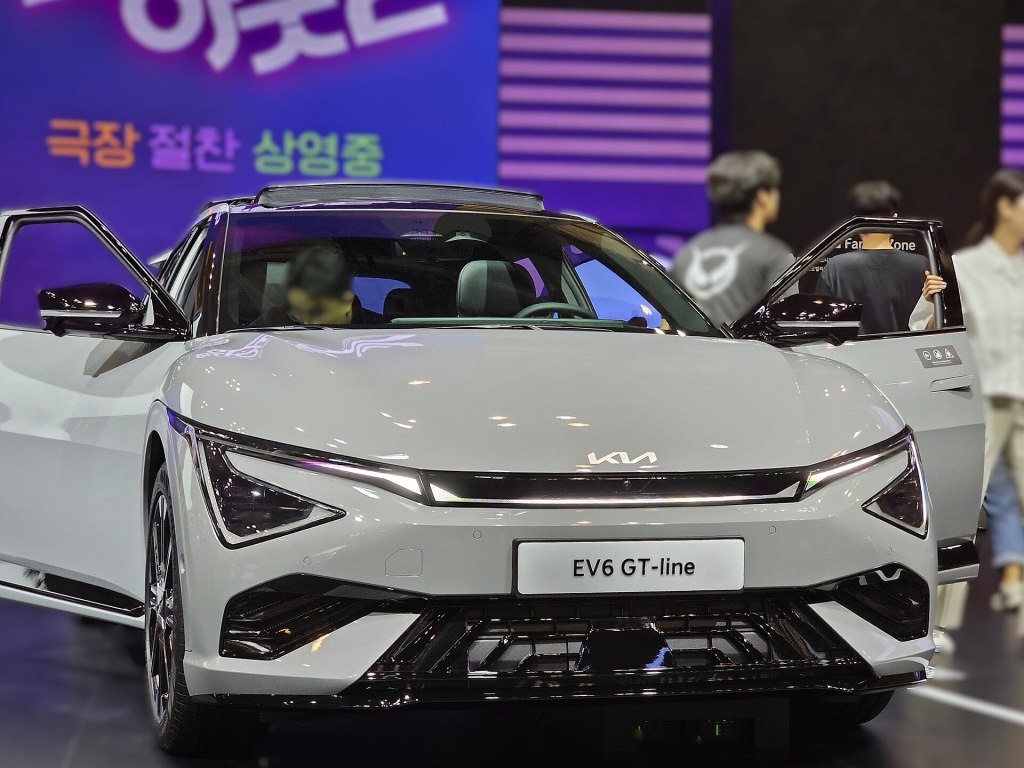
Kia has published US pricing for the 2027 EV6, and the headline is what didn’t change. It’s a carryover year, so prices match the 2026 car after Kia trimmed $5,000 off earlier in the model year. The entry Light SR rear-drive car costs $37,900 plus a $1,545 destination fee.
The ladder climbs from there. A Light Long Range RWD is $41,200 and is rated at 319 miles. The Wind RWD is $44,800, also 319 miles. At the top, the GT-Line AWD costs $53,000 and drops to 270 miles, the price of bigger wheels and two motors.
Now the twist. The smaller 2027 EV3 starts at just $29,890. Its entry Light FWD uses a 58.3 kWh pack for up to 221 miles, and higher trims with the 81.4 kWh battery reach 321 miles. That’s two miles more than the best EV6, for less money.
So why pay the EV6 premium? Charging speed. The EV6 runs on an 800-volt system and goes from 10% to 80% in about 18 minutes. The EV3 uses 400 volts and needs about 30 minutes for the same job. Think of it as the difference between a coffee stop and a sit-down lunch on every road trip. The EV6 is also roomier and has a native NACS port for Tesla Superchargers.
Why it matters to you: if you mostly charge at home and drive in town, the EV3 is the smarter buy and the range gap is gone. If you road-trip often, those 12 saved minutes per stop add up fast. And watch the deals: Kia is offering $5,000 on leftover 2026 EV6s and $1,500 on the 2027 EV3 to clear stock, which narrows the gap more than the sticker suggests.
For readers in Kenya and across East Africa, neither car is a mainstream showroom item yet, but these US prices are a useful benchmark as Chinese and Korean EVs fight for the region’s early adopters.
$29,890
2027 Kia EV3 starting price
18 min
EV6 charge, 10% to 80%
72,668
VW Group EVs in global battery recalls
254 sq mi
Tesla’s new Houston Robotaxi zone
History Corner
The Beetle that tamed Africa first.
Car History
How a coronation party became the toughest rally on Earth
June 1953. In London, crowds pack the streets for Queen Elizabeth II’s crowning at Westminster Abbey. Thousands of miles away, ninety crews are hammering across the dirt roads of Kenya, Uganda and Tanganyika, timed so their adventure ends as the new Queen is crowned. Nobody there knew they were inventing one of motorsport’s great legends.
The event was called the Coronation Safari, and it began as an idea between enthusiasts in Kenya. Eric Cecil, later nicknamed “Bwana Safari,” is credited as its driving force, with his cousin Neil Vincent alongside. It was meant as a one-off celebration. It never stopped.
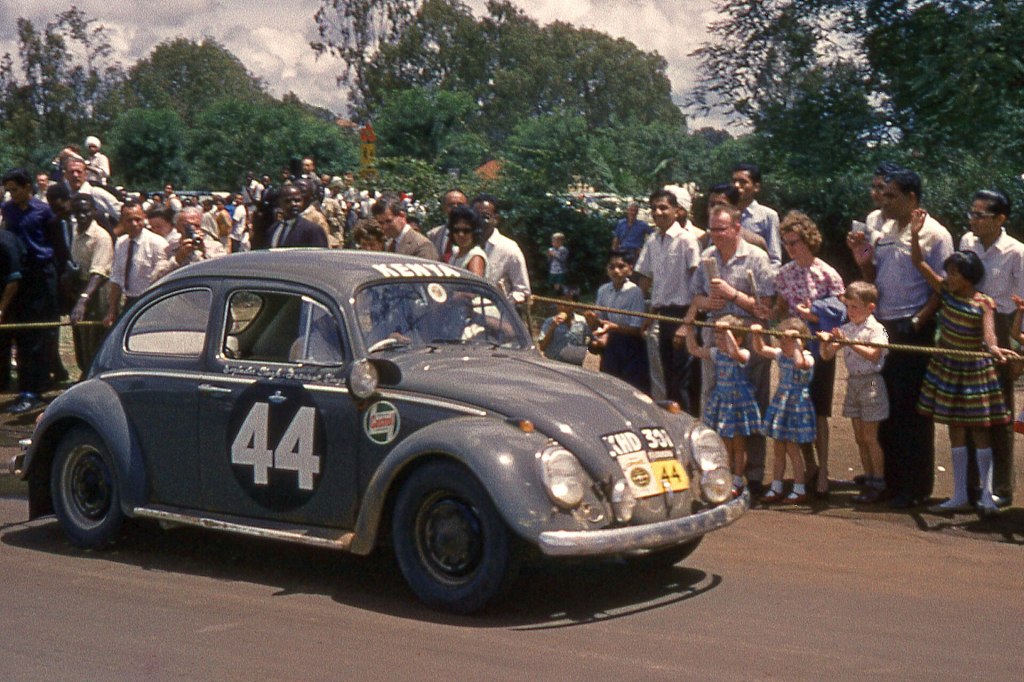
Here’s what most people don’t know. First: the official rally history lists Alan Dix in a humble Volkswagen Beetle as the winner. Another rally history notes the first event had no formal outright winner at all, with a Beetle and a Standard Vanguard credited with the best runs. Either way, a small air-cooled family car came out on top in some of the world’s roughest terrain.
Second: the route crossed three territories and covered roughly 5,000 km, a distance no modern rally would attempt in one go. Third: the name changed as East Africa changed. By the early 1960s, with independence approaching, it became the East African Safari Rally, and later simply the Safari Rally.
Fourth: for years, local crews ruled. A legend grew that overseas stars could not win in Africa, and East African drivers kept proving it. Joginder Singh, pictured below in his early Beetle days, won in 1965 with his brother Jaswant in a Volvo PV544, the first Sikh driver to win an international rally. Finland’s Hannu Mikkola finally broke the spell for visiting drivers in 1972.
Why it still matters: the Safari joined the World Rally Championship in 1973, left after 2002 and returned in 2021. Today it is Kenya’s biggest sporting showcase. And it’s a neat irony this week: Volkswagen, now asking EV owners to cap charging at 80%, built the car that conquered the very first Safari.
New Models & EVs
Luxury, recalls and a reality check.
BYD Yangwang
~$300K
BYD’s Phantom-sized flagship could debut in Dubai next week
BYD’s top brand, Yangwang, is preparing a flagship executive sedan about 5,500 mm long, roughly Rolls-Royce Phantom size, with rear-hinged coach doors, a BYD first. Reports point to a reveal in the UAE around November 5. It is rumoured to cost about 2 million yuan (around $300,000) and may be BYD’s first car with solid-state batteries, though BYD hasn’t confirmed that. For context, its current U7 sedan starts near $98,000.
Battery Recall
VW’s EV battery recall spreads to the Audi Q4 e-tron
Audi is recalling 9,048 2024–2025 Q4 e-tron and Q4 Sportback e-tron SUVs in the US over a battery fire risk. It shares batteries with the 22,524 VW ID.4s already recalled. The concern is that certain charging patterns above 80% charge could trigger a thermal event. The root cause is still unknown and there’s no permanent fix yet, so owners are asked to stop charging at 80%. Audi says it knows of no fires or injuries tied to the Q4. Worldwide, VW Group’s recalls now cover 72,668 EVs.
Quick take (opinion): An 80% cap is a sensible stopgap, but “we don’t know why yet” is a tough thing to tell owners. VW needs a real fix before winter road trips.
Tesla Watch
Rent it, map it, export it.
Tesla x Turo
You’ll soon be able to rent a Tesla with FSD on Turo
From October 28, Turo users in the US can filter for Teslas with Full Self-Driving (Supervised) switched on, verified through a direct link to Tesla’s systems. Hosts get a free one-month trial, then pay Tesla’s usual $99 a month. It’s a cheap way to try FSD, but remember it’s a Level 2 system: you must watch the road, and Turo hasn’t said who is liable in a crash.
Robotaxi
Tesla’s Houston Robotaxi zone grows 10x, but the fleet doesn’t
Tesla stretched its Houston Robotaxi area from about 25 to roughly 254 square miles, in a shape that looks a lot like a rocket. The catch: trackers count only 34 unsupervised Model Ys, about one car per 7.5 square miles. Waymo’s Houston zone is smaller, at nearly 50 square miles, so the bigger map doesn’t mean shorter waits.
Model 3 Canada
US-built Model 3 may return to Canada, at a tariff price
Tesla Canada’s site quietly lists the Model 3 Premium RWD with 584 km of range and a 5.2-second 0–100 km/h time, numbers that match the Fremont-built car rather than the 463 km Shanghai version. Shanghai imports are paused until more quota arrives, expected in March 2027. With Canada’s 25% counter-tariff on US-made cars, Electrek estimates a US-built car could cost C$65,000 to C$67,000, too pricey for the new C$5,000 EV rebate.
Your turn
Would you pay $8,000 more for the Kia EV6 just to save 12 minutes at every fast charger, or is the EV3 the smarter buy? Tell us in the comments.
Tomorrow is “The Big Question”: one story, all the angles.
Sources
- Electrek: 2027 Kia EV6 prices vs EV3
- East African Safari Rally: Our History
- Automobilist: Safari Rally, a coronation celebration to WRC
- Historic Marathon Rally Group: A brief history of the East African Safari Rally
- Electrek: BYD’s ultra-luxury EV
- Electrek: VW’s EV recall spreads to Audi
- Electrek: Tesla turns to Turo for FSD test drives
- Electrek: Tesla’s Houston Robotaxi geofence
- Electrek: US-built Model 3 returning to Canada
Photo credits: Kia EV6 GT-Line and Joginder & Jaswant Singh’s 1962 Safari Rally VW Type 1, both via Wikimedia Commons.


Leave a Reply