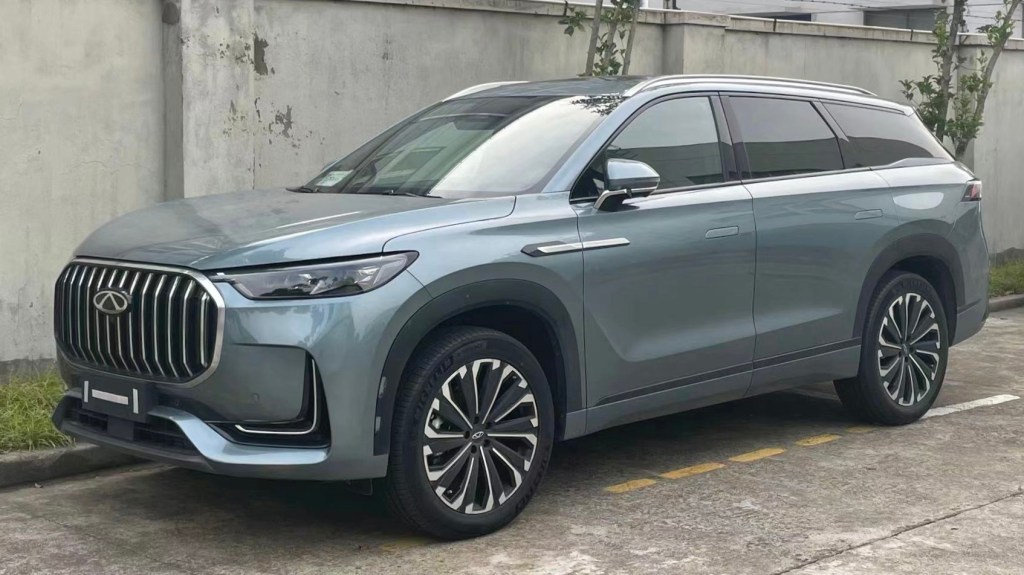
Washington has spent two years building a wall to keep Chinese cars out. Now China’s biggest car exporter says it has a ladder: a “China-free” car, built with an American partner. Plus a 73,000-car battery recall, Subaru quitting gas in Europe, and the wild 1953 rally that started as a party for a queen.
Your first stop for car news: the quick version here, plus a button on every story that takes you straight to the original report.
The Big Question
Can a Chinese carmaker sneak past the wall?
Chery & the US Market
Chery says it can build a “China-free” car for America
What happened. Chery vice president Charlie Zhang told reporters this week that the company is open to many routes into North America, including a partnership with an American automaker. His boldest line: from a technical point of view, Chery can engineer a car whose hardware and software contain nothing Chinese.
Chery has already set a date for Canada, where it plans to start selling cars in 2027. The United States is the bigger prize, and the harder one.
Why it’s so hard. Two walls stand in the way. First, a 100% US tariff on Chinese-built EVs, in place since 2024, which doubles the price before a car even reaches a dealer. Second, the Commerce Department’s connected-vehicle rule, which bans Chinese-linked software in cars sold in the US from the 2027 model year and Chinese-linked connectivity hardware from 2030. Lawmakers in both parties keep saying they want Chinese brands out entirely.
Zhang’s “China-free” pitch is aimed straight at that second wall. If the code, the modems and the chips come from somewhere else, and the car is built outside China with a US partner’s badge or factory, the rules get much harder to apply.
Who wins. Buyers, maybe. Chinese brands have shaken up Europe, Latin America, Australia and Africa with well-equipped cars at prices Western brands struggle to match. Think of it like budget airlines arriving at a hub airport: fares drop for everyone, not just people who fly the new airline. A struggling US automaker with spare factory space could win too, by getting cheap EV tech without paying to invent it.
Who loses. Detroit’s profit margins, first. American and Japanese brands make much of their money on trucks and SUVs, and a cheaper rival would squeeze them. Politicians who campaigned on keeping China out would also lose face if a Chery-engineered car showed up in a US showroom under a different name.
The catch. “China-free” is easy to say and very hard to prove. Modern cars run on millions of lines of code and parts from hundreds of suppliers. Regulators would want audits, and Congress could simply write a broader ban. A partner would also be taking a political risk that few CEOs would want in an election cycle.
What happens next. Watch Canada. If Chery cars go on sale there in 2027 and sell well, they’ll sit just across the border from Detroit, and pressure for some kind of deal will build. For readers in Kenya and East Africa, none of this changes much: Chinese brands are already competing openly there, which is a preview of what an open US market might look like.
Why it matters to you. If you’re shopping in the US, the cheapest new EVs on the planet are still out of reach. A partnership is the most realistic way that changes, and it would likely arrive with a familiar badge on the grille rather than a Chery logo.
Quick take: (opinion) A “China-free” Chinese car sounds like a riddle, but if it means cheaper EVs built by American workers, Washington should at least hear the pitch.
History Corner
The rally that began as a party for a queen.
Car History
1953: the Coronation Safari and the birth of a legend
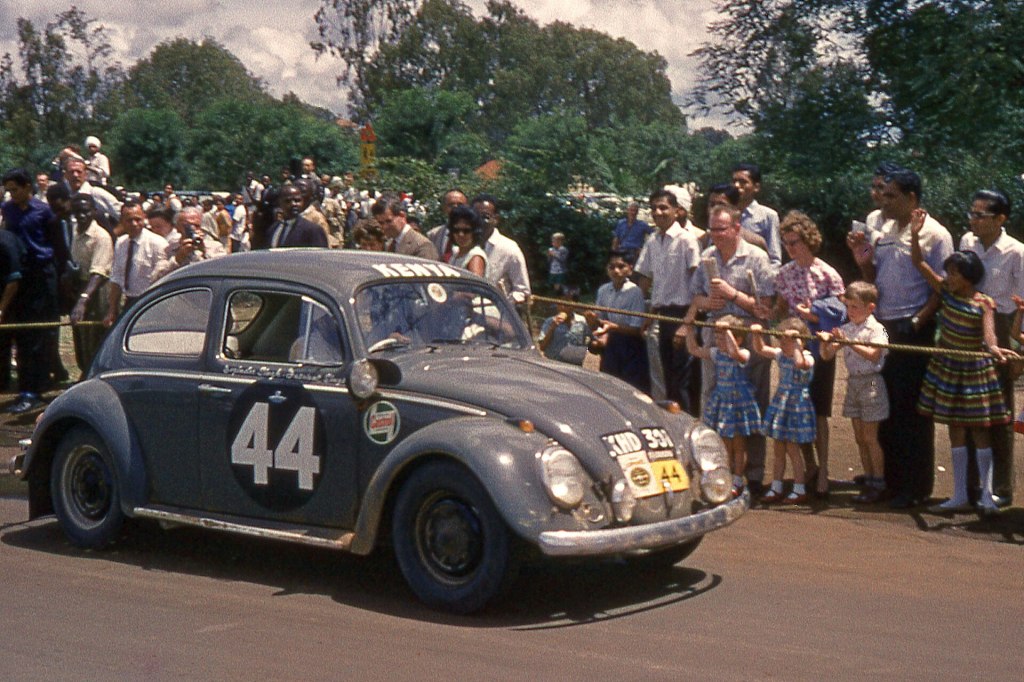
Picture Nairobi in late May 1953. Dozens of ordinary family saloons, loaded with spare tyres and jerry cans, line up to drive thousands of kilometres across East Africa, with no closed stages and no mechanics waiting at the end of each day. They’re racing a deadline set in London: the coronation of Queen Elizabeth II on 2 June.
That was the Coronation Safari, the event that grew into today’s Safari Rally Kenya. Here’s what most fans don’t know about it.
It was dreamed up over drinks. Kenyan accounts say the idea came from a conversation in early 1952 between Eric Cecil, Neil Vincent and Eric Tromp. Cecil, who chaired the competition committee of the East African motoring association, became its driving force.
It crossed three countries. The route ran from 27 May to 1 June through Kenya, Uganda and Tanganyika (now mainland Tanzania), covering roughly 5,000 km.
The whole road was the race. Unlike modern rallies, it ran on open public roads. Crews were timed between remote checkpoints and scored by penalties. The lowest penalty total won.
Nobody agrees who won. Alan Dix and Johnny Larsen in a Volkswagen Beetle are usually listed as the first winners. But several histories say no official outright winner was declared that year. It’s a fitting start for a rally famous for chaos.
Why it still matters. The Safari joined the very first World Rally Championship in 1973, dropped off the calendar after 2002, and returned in 2021, when Sébastien Ogier won in a Toyota Yaris near Naivasha. Seven decades on, it’s still the rally that tests whether a car can survive Africa, and the reason Kenya’s name is on the world motorsport map. And yes, today’s VW battery recall would have baffled those 1953 Beetle crews, who had to fix every problem themselves.
EVs & Recalls
Charge to 80%. Or VW will do it for you.
Volkswagen Recall
72,668
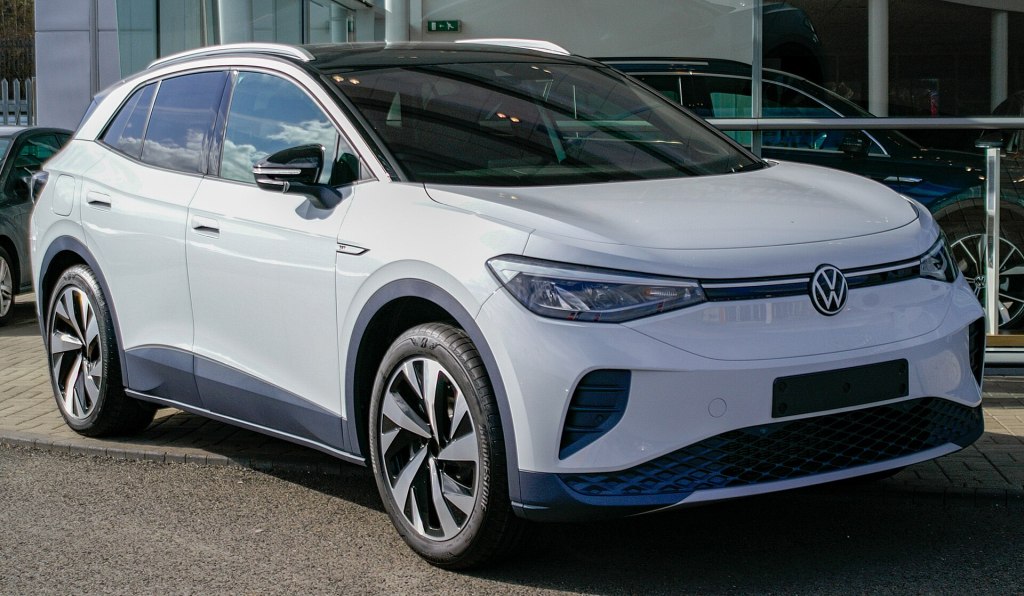
VW recalls nearly 73,000 EVs over battery fire risk
Volkswagen’s worldwide recall covers 72,668 ID.3, ID.4, ID.7 and ID. Buzz models built from 2022 to 2025, plus the Cupra Born. Some battery cells from a supplier were out of spec, and charging above 80% can, in rare cases, lead to a fire. Until a fix is ready, owners should cap charging at 80%. In the US, where 22,524 ID.4s are affected, VW plans to apply that limit remotely around October 27 unless owners opt out. Formal letters are due November 27.
Subaru in Europe
Subaru will sell only EVs in Europe from 2028
Subaru is pulling its gas cars from Europe, blaming EU emissions and safety-tech rules. The Outback goes at the end of 2026, then the Impreza, Crosstrek and Forester in 2027. From 2028, Europeans get just three Toyota-developed EVs: the Solterra, E-Outback and Uncharted. The US keeps its hybrid boxers, and Subaru just showed a 509 hp in-house EV prototype that hits 100 km/h in under four seconds. Kenya’s Subaru fans can relax: this is a Europe-only move.
BMW iX5
BMW’s iX5 hits 464 kW in a public charging demo
At an IONNA station in Southern California, BMW’s new iX5 peaked at 464 kW and added up to 170 miles in 10 minutes. Its 144 kWh pack goes from 10% to 80% in 22 minutes. The 578 hp SUV starts at $79,800, arrives in early 2027, and will be BMW’s first US-built EV, made in Spartanburg. The catch: few US chargers can deliver that peak yet.
Real-World Range
Mercedes GLC EV beats its EPA range by 61 miles
In Edmunds’ real-world test, the 2027 Mercedes GLC 400 EV covered 392 miles against an EPA estimate of 331, an 18% bonus. It beat the Volvo EX60 (352), Cadillac Optiq (339) and Audi Q6 e-tron (337). Ten years ago, one EV had 300 miles of EPA range; by the end of 2026 there will be about 60.
Industry
New pecking order.
EV Sales
Rivian jumps from #10 to #2 US EV brand
Cox Automotive’s third-quarter numbers put Rivian second only to Tesla in US EV sales, up from tenth a year ago. Most brands’ EV sales fell; Rivian, Mercedes, Lexus, Toyota and Subaru were exceptions. The cheaper R2, launched in June, added 3,456 sales, while Tesla’s total sales dropped nearly 20% year over year. Count GM’s brands together, though, and GM still holds second.
Tesla & SpaceX
Tesla and SpaceX start exploring a merger
On SpaceX’s earnings call, Elon Musk said both companies have formed special committees of independent board members to study a merger, which he supports. Musk owns about 22% of Tesla and controls more than half of SpaceX’s voting shares. Critics warn a deal could dilute Tesla shareholders and trigger share awards under Musk’s giant pay package.
By the numbers
80%
Charge cap for recalled VW EVs
464 kW
BMW iX5 peak charging rate
392 mi
Mercedes GLC EV real-world range
~5,000 km
Route of the 1953 Coronation Safari
Your turn
Would you buy a Chinese-engineered car if it wore an American badge and was built in the US? Tell us yes or no, and why, in the comments.
Tomorrow is EV & Tech Day: the biggest battery, charging and self-driving news, in one quick read.
Sources
- The Drive: Chery says it can build a China-free car
- Wikipedia: Safari Rally history
- Nation: Why the Safari Rally exists
- WRC: Safari Rally Kenya through the ages
- Electrek: VW recalls nearly 73,000 EVs
- Electrek: Subaru goes EV-only in Europe
- Electrek: BMW iX5 charging demo
- Electrek: Mercedes GLC EV range test
- Electrek: Rivian now #2 US EV brand
- Electrek: Tesla and SpaceX explore a merger
Photo credits: Chery Tiggo 9, 2021 Volkswagen ID.4, and Joginder & Jaswant Singh’s 1962 Safari Rally VW, all via Wikimedia Commons.


Leave a Reply